
Retail & Consumer Brand Expansion
Boots sets 28 September TikTok Shop launch with own-brand beauty
Boots will open a TikTok Shop pilot with selected beauty ranges, using THG Ingenuity to support its entry into the social commerce channel.
25 Sept

The daily brief on companies, capital and policy moving into the UK and Europe.
Schwarz Group is reportedly preparing an offer as Tesco pursues a Central European sale covering a division with £4.5bn in annual revenue.

By Chen Liwei, China Correspondent · London
27 September 2026 · Reported from Retail Insight Network
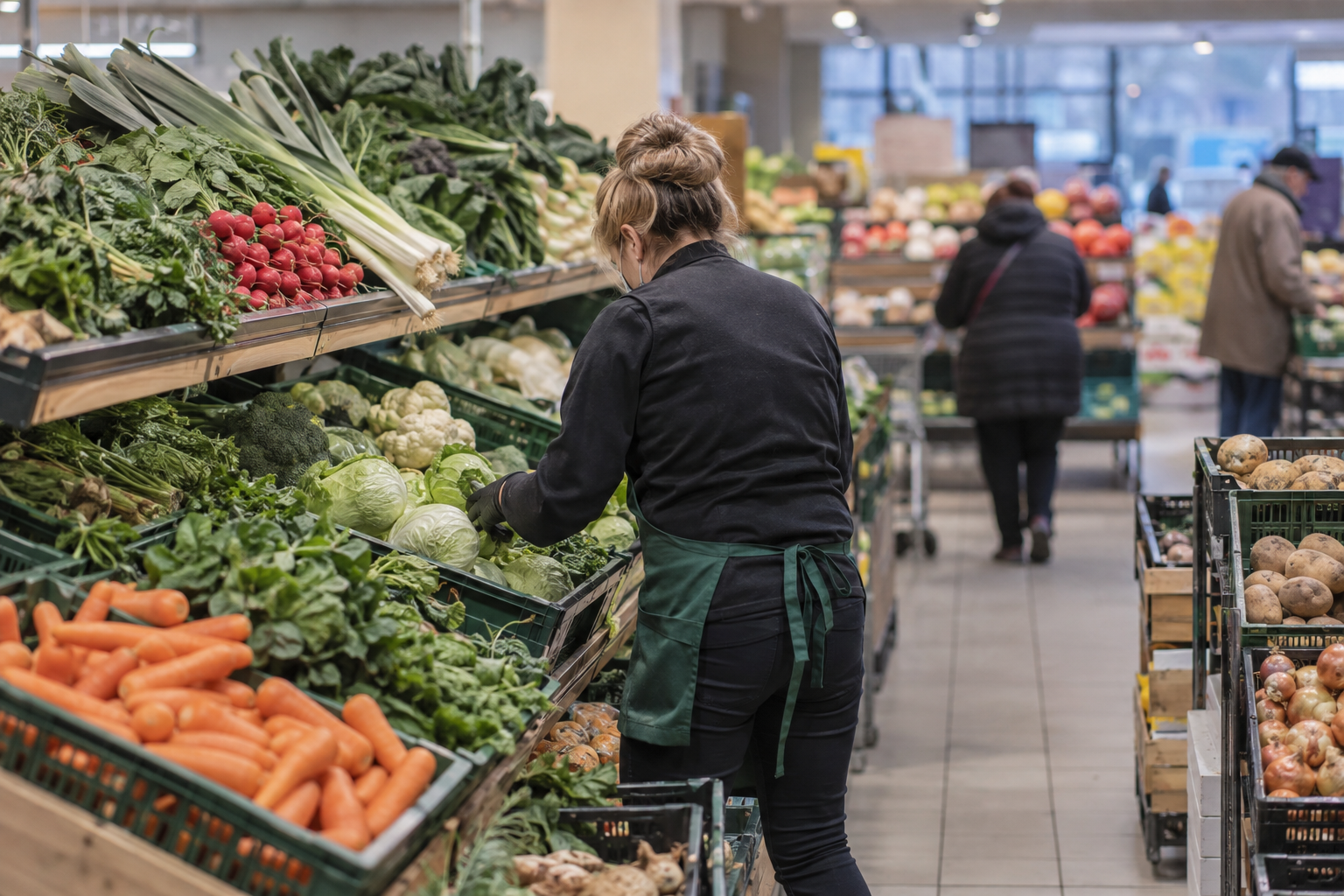
Schwarz Group, the German family-owned retailer behind Lidl and Kaufland, is reportedly preparing to bid for Tesco’s businesses in the Czech Republic and Slovakia. Retail Insight Network reported the prospective offer, citing Financial Times reporting based on unnamed sources.
The potential transaction forms part of Tesco’s effort to sell its continental European operations. Retail Insight Network puts the division’s revenue last year at £4.5bn, with adjusted operating profit of £115m. Tesco operates 561 stores across its eastern European markets; that total covers the wider regional business, not just the two countries Schwarz is reportedly targeting.
Schwarz may face competition from Ahold Delhaize, the Dutch supermarket group, and Biedronka, the Polish discount chain owned by Jerónimo Martins. Both are also said to be preparing offers, according to Retail Insight Network. The reported interest points to a potential contest between established grocery operators rather than an agreed acquisition.
Tesco’s continental European division is its only substantial operation beyond the UK and Ireland, according to Retail Insight Network. Selling it would therefore narrow the British grocer’s geographical footprint significantly, rather than simply remove a small peripheral business.
The company’s regional history began in Hungary, where Tesco opened its first European store in 1995. Retail Insight Network reports that competition has intensified across its eastern European markets, providing the commercial backdrop to the disposal process.
Tesco has already withdrawn from several other international markets. Its loss-making US venture, Fresh & Easy, closed in 2013. The retailer then sold its South Korean business for £4.2bn in 2015 and its operations in Thailand and Malaysia for £8bn in 2020, according to Retail Insight Network. Those exits establish a longer-running shift away from the overseas portfolio Tesco once assembled.
Government policy adds another consideration for the Hungarian business. Retail Insight Network reports that price caps and levies introduced under former Hungarian prime minister Viktor Orbán put pressure on Tesco, with the measures directed at foreign-owned retail chains.
Those restrictions remain in place under current prime minister Péter Magyar, according to the outlet. Magyar said earlier in the month covered by the report that the policy was being reviewed because of its effects on Hungarian farmers. That stated review concerns the wider impact of retail intervention; the source reports no decision to remove the measures.
Tesco has appointed Goldman Sachs and Citi to manage the sale of its Central European division, which spans Hungary, the Czech Republic and Slovakia, Retail Insight Network reports. The Czech and Slovak operations are being marketed separately from Hungary, allowing bidders to pursue those businesses without taking on all three markets.
First-round bids were expected by the end of the month in which the report appeared, according to the Financial Times account relayed by Retail Insight Network. Other bidders could still enter the process. That timetable concerns initial offers, not a final agreement or a completion date.
For retailers considering European expansion, the separation of Hungary from the Czech and Slovak assets makes the scope of any acquisition a central issue. An offer for two national businesses would represent a different market commitment from buying Tesco’s entire regional division. The next bidding stage should begin to clarify which businesses prospective buyers want, while the reported Hungarian policy review remains a separate consideration.
Tesco’s sale process highlights two practical considerations for companies expanding in Europe: the economics of an established retail network and the policy environment in each country. The division’s £4.5bn in revenue sits alongside £115m in adjusted operating profit, making profitability as important as scale. Marketing Hungary separately also gives potential buyers a choice over their geographical exposure. For expansion teams, the opportunity is to assess each national business on its own commercial and regulatory terms, rather than treat Central Europe as one uniform market.
Source
Original reporting by Retail Insight Network. This report was written independently for Market Entry Wire.
Boots will open a TikTok Shop pilot with selected beauty ranges, using THG Ingenuity to support its entry into the social commerce channel.
25 Sept

The camera maker has opened its first flagship outside Asia in Times Square after shipping more than 10 million cameras worldwide, with Munich in its expansion plans.
23 Sept

Brussels says electrification could cut annual fossil fuel imports by €260bn by 2040, but uneven incentives are reshaping Europe's electric car market.
27 Sept

PNOĒ plans an October launch for its self-serve metabolic testing device as the US-focused business expands in Europe and through partners elsewhere.
27 Sept

Washington wants to intervene in X’s appeal against an EU digital rules penalty, bringing regulatory jurisdiction into focus for US technology businesses.
26 Sept

The British AI cloud company has secured funding led by Third Point as it develops data centre campuses in Norway and West Virginia, TechCrunch reports.
26 Sept