
B2B Commercial Expansion
Muju Earth starts paid UK trials for soil-aerating Aeropod
Nine UK farmers will test Muju Earth’s Aeropod this autumn, with more than 30 on a waiting list for a device designed to reduce cultivation costs.
25 Sept

The daily brief on companies, capital and policy moving into the UK and Europe.
PNOĒ plans an October launch for its self-serve metabolic testing device as the US-focused business expands in Europe and through partners elsewhere.

By Arjun Mehta, Capital Reporter · London
27 September 2026 · Reported from TechCrunch
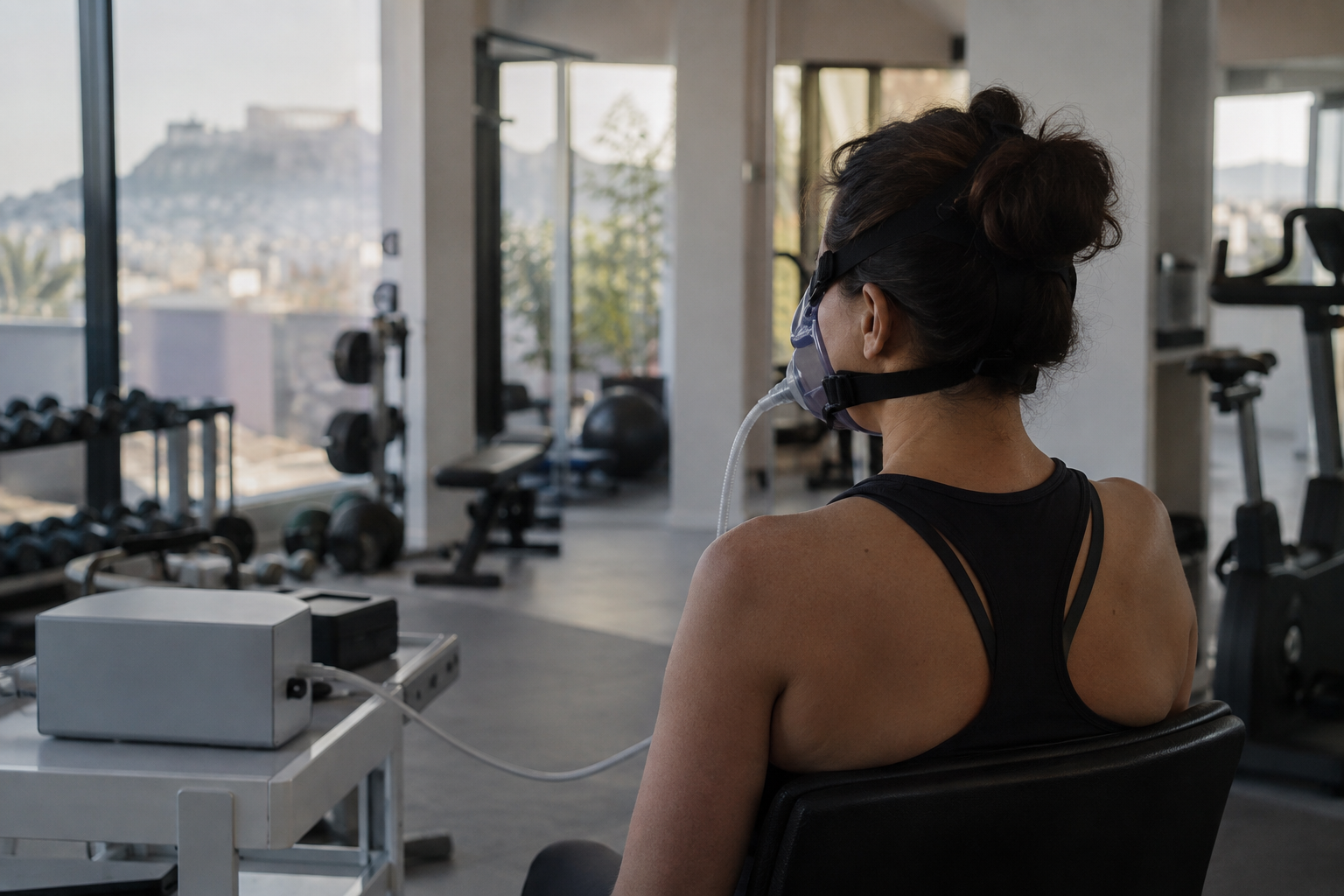
PNOĒ is preparing to launch a metabolic testing device on 1 October 2026 that removes the need for a trained operator, potentially widening its customer base among gyms and other wellness businesses. TechCrunch reports that the Massachusetts-based company’s PNOĒ 2.0 will allow customers to carry out their own breath tests, reducing a staffing constraint on its existing product.
The commercial model remains exclusively business-to-business: PNOĒ supplies organisations that offer testing to their customers. Monthly subscriptions start at $400 and can exceed $1,000, covering equipment, software, training and marketing support. That gives prospective buyers a recurring operating cost to assess against demand for testing and the services it might help them sell.
The launch follows an $11 million funding round, taking PNOĒ’s total capital raised to approximately $22 million, according to TechCrunch. Investors include 50 Years and Google Maps co-founder Lars Rasmussen, who now lives in Athens. PNOĒ has 110 employees and says it recently reached profitability while recording annual growth above 100%; the report does not specify which financial measure that growth represents.
The software also connects test findings with services available from the host business. A gym or spa can use the results to suggest relevant offerings, and co-founder and chief executive Apostolos Atsalakis told TechCrunch that many customers deploy testing when welcoming new members. For those buyers, the product therefore supports customer onboarding as well as measurement.
PNOĒ is based in Malden, Massachusetts, and operates in Athens, Greece. Its origins lie in Atsalakis’s doctoral research into sensing technologies at the University of Cambridge. He established the company with childhood friend Panos Papadiamantis, now chief product officer, and the startup subsequently joined Y Combinator’s Winter 2019 programme, according to TechCrunch.
Its business customers span fitness, hospitality, professional sport and healthcare. TechCrunch names Four Seasons hotels, Red Bull, the NBA, Mount Sinai Health System and Restore Hyper Wellness among its clients. Atsalakis also said PNOĒ testing was available at almost every Equinox club, giving the company an established presence within a premium gym network before the new launch.
Metabolic testing examines oxygen consumption and carbon dioxide output to understand how the body uses energy. The underlying method is more than a century old and has long been used to measure VO₂ max, the maximum oxygen a person can use during exercise. Historically, large and costly equipment concentrated access in hospitals, sports laboratories and programmes serving elite athletes or executive wellness customers.
PNOĒ says its testing captures 23 biomarkers. Alongside VO₂ max, these include resting metabolic rate, which measures energy use at rest, and metabolic flexibility, which describes the body’s ability to switch between fat and carbohydrate fuels. The company’s proposition combines portable measurement with software that converts findings into guidance on diet and training; its claim to laboratory-level accuracy remains a company claim in the material reported by TechCrunch.
Competition comes from several directions. Apple, Garmin and Whoop estimate VO₂ max using heart-rate data, while Lumen uses breath analysis to assess fat and carbohydrate burning. Conventional metabolic carts continue to serve laboratories and hospitals. Those alternatives leave prospective PNOĒ buyers weighing a dedicated testing service against wearable estimates, consumer breath devices and specialist clinical equipment.
Atsalakis told TechCrunch that the new process involves putting on the mask, pressing a button and sitting while breathing for eight minutes. He sees self-administration as a route into fitness centres without dedicated testing staff and potentially pharmacies. Those are proposed opportunities, rather than announced pharmacy contracts or confirmed new distribution agreements.
The hardware was developed with Milan-based Design Group Italia through extensive design revisions. Atsalakis said the new version is more compact and has fewer components than its predecessor, which he expects to improve reliability. For business operators, that design ambition concerns the practical demands of equipment used repeatedly by different customers, not simply portability.
Shared use also shaped the product. TechCrunch reports that the electronics can be separated from the silicone mask and straps, allowing customers to retain their own face-contact components while a business shares the more expensive hardware. This arrangement addresses a specific concern for multi-user venues: customers do not have to share the same mask to access the testing equipment.
Atsalakis argues that metabolic measurements can inform calorie requirements and training choices in ways that blood testing cannot. He also regards VO₂ max as a particularly important indicator of longevity. TechCrunch places that position within growing wellness interest in cardiorespiratory fitness and research associating higher fitness levels with lower mortality; it does not establish that using PNOĒ’s device extends life.
The company draws a firm boundary around its present offering. PNOĒ has not received clearance from the US Food and Drug Administration, and Atsalakis told TechCrunch that it does not issue medical recommendations. He said doctors cannot use its results as a basis for prescribing medication. Despite having healthcare organisations among its customers, PNOĒ currently positions the device as a wellness product.
About 85% of PNOĒ’s business comes from the US, which Atsalakis described to TechCrunch as the most developed longevity market. The company is now expanding in Europe and using partners to reach Latin America and Asia. The report does not identify individual European target countries, a UK launch date or the partners responsible for the other regional markets.
Atsalakis said PNOĒ intends to raise a Series B within six to 12 months of the September 2026 report. That puts its stated fundraising window roughly between March and September 2027. No target amount or prospective investors were disclosed, leaving the scale of the next financing open as the company pursues a broader international footprint.
For UK and European fitness operators considering the service, the immediate commercial question is whether customer demand and associated service sales can justify the subscription. Self-administration changes the staffing requirement, but the source provides no customer-level revenue, utilisation or payback figures. Buyers therefore have a proposed operational advantage to assess, rather than a published return-on-investment benchmark.
Disease detection remains a separate, longer-term ambition. Atsalakis believes PNOĒ’s growing dataset could eventually help identify health problems, drawing on wider research into disease signals in breath. He told TechCrunch that full diagnosis remains years away and that regulatory requirements could extend the timetable. Companies assessing the current product should therefore distinguish its available wellness functions from capabilities that remain under development.
PNOĒ’s approach highlights a practical market-entry issue for wellness technology suppliers: a product’s reach depends partly on whether customers need specialist staff to operate it. For UK and European gyms, hotels and spas, self-serve testing could make a new service easier to introduce, while subscriptions provide a clear starting cost. The commercial case still needs scrutiny: TechCrunch reports no venue-level payback figures or specific UK rollout. Operators also need to keep the current wellness offer distinct from PNOĒ’s longer-term diagnostic ambitions.
Source
Original reporting by TechCrunch. This report was written independently for Market Entry Wire.
Nine UK farmers will test Muju Earth’s Aeropod this autumn, with more than 30 on a waiting list for a device designed to reduce cultivation costs.
25 Sept

Northern Ireland gym equipment company BLK BOX is expanding in France, Spain and Germany, with founder Greg Bradley citing the Windsor Framework as an advantage.
25 Sept

The French software company will give up to 5,000 Commission developers a single portal for cloud services, alongside a procurement route into other EU institutions.
21 Sept

Schwarz Group is reportedly preparing an offer as Tesco pursues a Central European sale covering a division with £4.5bn in annual revenue.
27 Sept

Brussels says electrification could cut annual fossil fuel imports by €260bn by 2040, but uneven incentives are reshaping Europe's electric car market.
27 Sept

Washington wants to intervene in X’s appeal against an EU digital rules penalty, bringing regulatory jurisdiction into focus for US technology businesses.
26 Sept

The British AI cloud company has secured funding led by Third Point as it develops data centre campuses in Norway and West Virginia, TechCrunch reports.
26 Sept