B2B Commercial Expansion
BLK BOX expands in Europe as workforce reaches 180
Northern Ireland gym equipment company BLK BOX is expanding in France, Spain and Germany, with founder Greg Bradley citing the Windsor Framework as an advantage.
25 Sept

The daily brief on companies, capital and policy moving into the UK and Europe.
Nine UK farmers will test Muju Earth’s Aeropod this autumn, with more than 30 on a waiting list for a device designed to reduce cultivation costs.

By Tomás Ferreira, Europe Correspondent · Berlin
25 September 2026 · Reported from TechCrunch
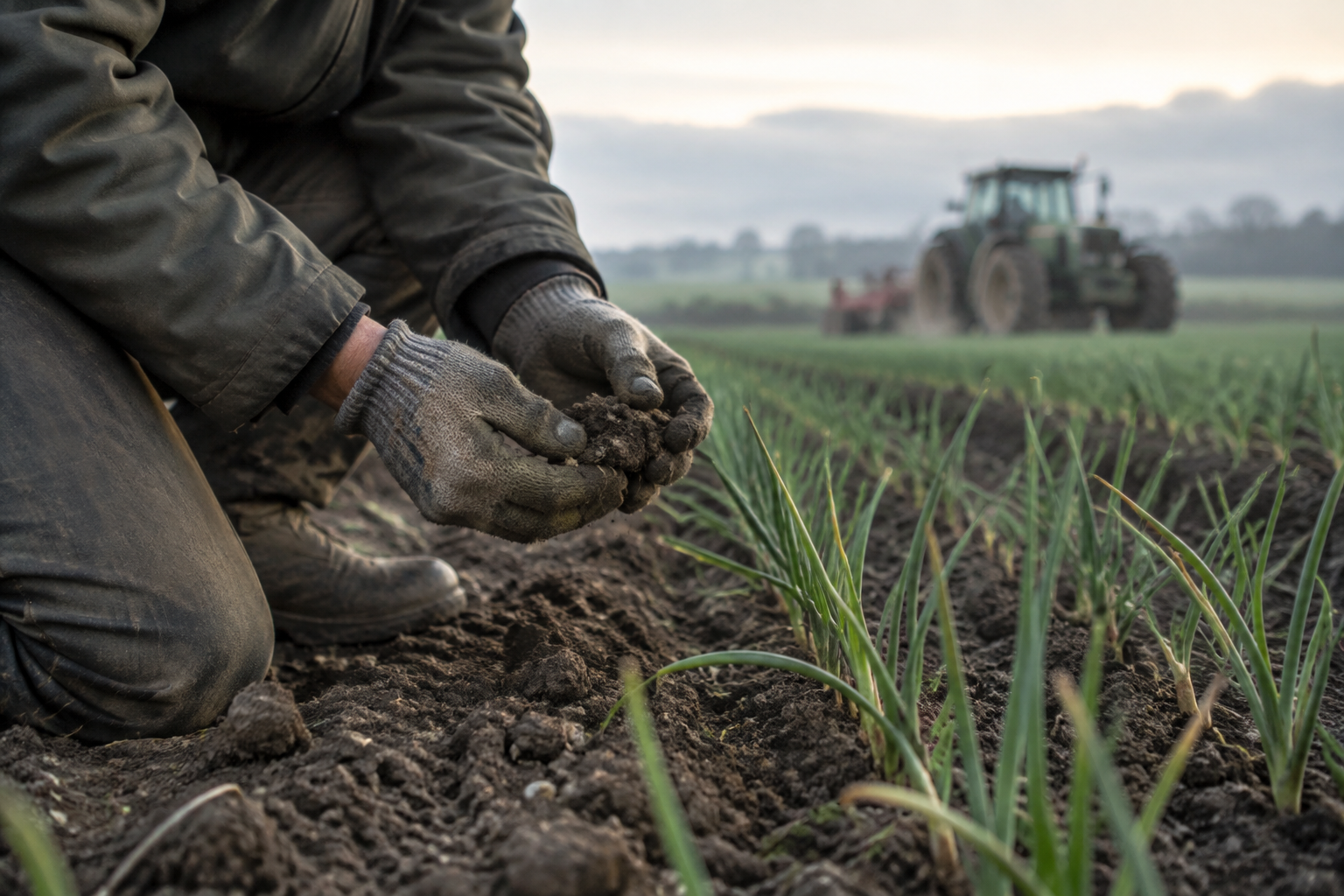
Muju Earth is taking its soil-aeration technology into paid UK field trials this autumn, with nine farmers participating and more than 30 on a waiting list, TechCrunch reports. The startup’s Aeropod is designed to loosen compacted soil without requiring a separate tilling operation, giving growers a potential way to reduce cultivation costs.
The move follows laboratory testing and brings the device into a commercial farming setting. Muju Earth says its approach could cut farmers’ tilling costs by at least half while supporting healthier soil. Those savings remain a company claim rather than a reported result from the forthcoming field trials.
The problem starts with the machinery farmers depend on to cultivate and harvest crops. Its weight can compact the ground, restricting growing conditions. According to studies cited by TechCrunch, soil compaction can reduce yields by between 20% and 60%. Ploughing can relieve that pressure, but adds expense and labour while causing other damage to soil health.
Co-founders Ifeoluwa Afolayan and Wangyang Hu developed the Aeropod during their time at Imperial College London. TechCrunch reports that they set out to create a product that would improve farm economics alongside the condition of the soil, rather than treating those as competing priorities.
Roughly fingernail-sized, the Aeropod can be placed in the ground alongside seeds using farmers’ existing sowing equipment, with no advance tilling required. The aeration process itself needs neither machinery nor robotics. That compatibility makes the product an addition to an established farm operation rather than a replacement equipment purchase.
A combination of temperature, pressure and moisture triggers the device to open. This loosens the surrounding soil and forms small passages through which water, air and roots can move more easily, according to TechCrunch’s account of the technology.
Muju Earth’s first intended customers are UK onion growers. Afolayan, the company’s chief executive, told TechCrunch that onions are especially vulnerable to compacted soil. The initial market therefore centres on a crop where the problem the Aeropod addresses is particularly acute, rather than an immediate push across multiple farming categories.
Afolayan put the cost of a single tilling pass at about £250–£400 per hectare once labour, diesel and equipment wear are included. She told TechCrunch that the Aeropod should achieve a comparable effect for £100 per hectare. These estimates give prospective buyers a concrete cost comparison, although the lower price alone does not establish equivalent performance in the field.
Farmer interest has largely come to the business rather than through outbound marketing, Afolayan told TechCrunch. She said growers readily understand the offer and have been the main force behind early adoption. Her stated design priority was to make the treatment as straightforward to use as sowing, a practice familiar across farming markets.
Alongside the UK trials, Muju Earth has attracted interest from businesses developing biological soil amendments, TechCrunch reports. These products often contain living microbes and can supplement or replace chemical fertilisers. Because they perform best in aerated soil, their developers are interested in combining them with the Aeropod. That creates a potential business-to-business route beyond selling directly to growers, although the report names no agreed partnerships.
Muju Earth will also participate in the 200-company Startup Battlefield cohort at TechCrunch Disrupt in San Francisco. The event takes place on 13–15 October 2026 at Moscone West, with 20 finalists due to pitch on the main stage. For the startup, that puts an international industry platform alongside its first paid UK field deployment; its stated initial customer focus remains British onion growers.
Muju Earth’s approach offers a focused example for agricultural technology businesses entering the UK: address a crop-specific problem, fit existing equipment and give buyers a clear cost comparison. The paid trials will move its proposition beyond laboratory testing, while interest from biological soil-input developers suggests a possible partnership channel. For companies considering wider European expansion, the distinction between projected savings and demonstrated field performance remains important: the reported £100-per-hectare proposition is an estimate, not yet a published trial outcome.
Source
Original reporting by TechCrunch. This report was written independently for Market Entry Wire.
Northern Ireland gym equipment company BLK BOX is expanding in France, Spain and Germany, with founder Greg Bradley citing the Windsor Framework as an advantage.
25 Sept

The French software company will give up to 5,000 Commission developers a single portal for cloud services, alongside a procurement route into other EU institutions.
21 Sept

Washington wants to intervene in X’s appeal against an EU digital rules penalty, bringing regulatory jurisdiction into focus for US technology businesses.
26 Sept

The British AI cloud company has secured funding led by Third Point as it develops data centre campuses in Norway and West Virginia, TechCrunch reports.
26 Sept

The National University of Singapore’s venture arm is expanding into Europe with UnternehmerTUM and has launched AI software to help research find commercial buyers.
26 Sept

The enhanced agreement sets out new rules for staff transfers, digital trade and market access, with UK services exports forecast to rise by £5.2bn annually in the long run.
26 Sept