
Trade, Regulation & Policy
OpenAI to watermark ChatGPT and Codex text in the EU
OpenAI will introduce invisible text watermarks to meet EU AI Act requirements, while giving developers worldwide an optional setting for selected models.
06 Oct

The daily brief on companies, capital and policy moving into the UK and Europe.
Equinor says rejecting Rosebank and Jackdaw could put future UK investment at risk, as ministers weigh energy supply, climate assessments and public objections.

By Marcus Doyle, North America Correspondent · Toronto
7 October 2026 · Reported from BBC Business
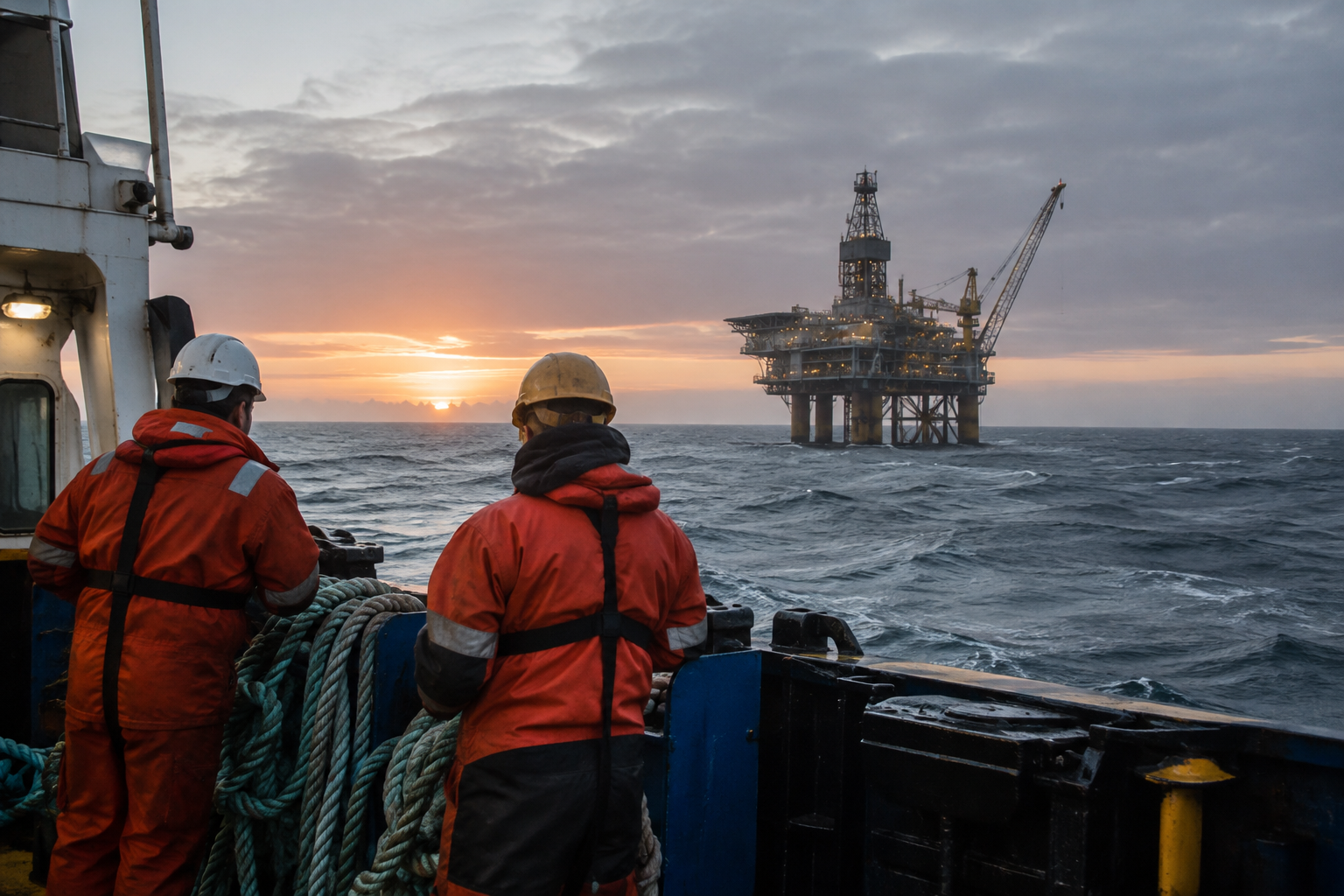
Equinor could reconsider further investment in the UK if ministers refuse permission for the Rosebank and Jackdaw oil and gas developments, BBC Business reports. Chief executive Anders Opedal raised the prospect as the government prepares to decide whether extraction can proceed at the two projects. Rosebank alone is estimated to contain as much as 500 million barrels of oil and gas.
The warning makes the pending decisions a test of the Norwegian state oil company’s willingness to commit more capital to Britain. Opedal did not announce an investment withdrawal: his comments described a possible response to rejection, rather than a decision already taken.
According to BBC Business, both developments are operated by Adura, the joint venture between Equinor and Shell. Aberdeen-based Ithaca holds a separate 20% interest in Rosebank. The field lies roughly 80 miles north-west of the Shetland Islands in the North Atlantic and is the UK’s biggest undeveloped oil and gas resource.
Rosebank’s development history stretches back more than two decades. Opedal told BBC Business that its exploration licence was issued in 2001, oil and gas were discovered in 2004, and the final investment decision followed in 2023. Those milestones distinguish the current approval question from the initial award of exploration rights.
The previous Conservative government authorised both Rosebank and Jackdaw. Environmental campaigners subsequently challenged the consents on the grounds that their climate effects had not been fully assessed, and a Scottish court ruling delayed the developments, BBC Business reports. The projects therefore face renewed scrutiny after having already secured political approval once.
Labour’s election manifesto included a ban on new drilling, according to BBC Business. The decisions now place that commitment alongside pressure to maintain domestic energy supplies, with UK production forecast to fall by half by 2035 and higher energy prices intensifying the security debate.
Norway already supplies half of the UK’s gas needs, BBC Business reports. The Norwegian government continues to award exploration licences in its own North Sea waters, while Equinor expects its production to remain around current levels until the middle of the next decade. The two countries are consequently approaching the future of the same producing region differently.
Supply exposure also extends beyond offshore production. Market Entry Wire has separately reported on UK preparations for a possible US diesel export ban, another issue putting access to imported fuel on the policy agenda.
Opedal’s case for additional UK extraction rests partly on the geological similarities across the North Sea. Speaking to BBC Business, he noted that some fields cross the maritime boundary and that Norway’s industry learned from the earlier British offshore sector. Whether Britain produces more, he argued, is “a political choice”.
Despite his warning, Opedal remained optimistic that the government’s stated pragmatic approach would lead to approval. He described the unresolved position to BBC Business as “an uncomfortable position to be in”, signalling that uncertainty itself is a concern for the developer, even before ministers reach a decision.
Tessa Khan, executive director of the anti-fossil-fuel organisation Uplift, disputed the economic case for Rosebank. In comments reported by BBC Business, she argued that its output would largely be oil destined for export, would not reduce household bills and would principally benefit Equinor and the Norwegian government. She also said Labour’s climate credibility was at stake.
The government’s position leaves room for continued fossil-fuel production alongside the clean-energy transition. A spokesperson told BBC Business that North Sea oil and gas would remain important to the energy system for decades, while presenting the shift to clean power as necessary for protecting employment and addressing climate change.
The final decision rests with Energy Secretary Miatta Fahnbulleh following a public consultation that closed in August, BBC Business reports. The government said it would consider the relevant evidence, including environmental assessments and submissions received through that consultation. The source material gives no date for an announcement.
Jackdaw has a potentially shorter route from approval to production. Adura has previously said construction is 99% finished and that, if permission arrives soon, the development could supply gas to UK households by this winter, according to BBC Business. That remains a conditional timetable rather than a confirmed start date.
For companies planning UK energy investment, the distinction between a licence, a capital commitment and permission to produce is commercially significant. Rosebank and Jackdaw show that earlier authorisations do not remove exposure to court challenges or subsequent environmental review. Businesses assessing entry or expansion need to account for those separate approval stages when judging how quickly committed capital can translate into operating revenue.
For companies entering or expanding in the UK energy market, the Rosebank and Jackdaw decisions highlight the importance of approval risk alongside resource size and construction progress. An exploration licence and a final investment decision do not guarantee permission to produce. Equinor’s warning also connects individual project decisions with wider capital allocation. Investors and suppliers assessing UK opportunities need to distinguish conditional production targets from authorised schedules, particularly where environmental review and legal challenges can affect delivery.
Source
Original reporting by BBC Business. This report was written independently for Market Entry Wire.
OpenAI will introduce invisible text watermarks to meet EU AI Act requirements, while giving developers worldwide an optional setting for selected models.
06 Oct
The US supplies about a third of UK diesel imports, leaving businesses exposed to further fuel-cost increases as diesel reaches 199.18p a litre.
28 Sept

Washington wants to intervene in X’s appeal against an EU digital rules penalty, bringing regulatory jurisdiction into focus for US technology businesses.
26 Sept

The enhanced agreement sets out new rules for staff transfers, digital trade and market access, with UK services exports forecast to rise by £5.2bn annually in the long run.
26 Sept

Go Greek, Myka and Yo-Chi have opened in London as frozen yoghurt returns to favour, with Europe’s market estimated at £434m in 2026.
07 Oct

Birmingham Tech Week returns on 19–23 October with an AI-focused programme bringing investors, researchers and businesses together across the West Midlands.
07 Oct

Berlin-based Finmid is moving into vehicle finance through Bolt and merchant lending through Skroutz, alongside fresh funding to develop its lending infrastructure.
06 Oct

The commercial insurance AI company will use its seed funding to expand in the US and Europe and recruit across engineering and go-to-market teams.
06 Oct