
Market Intelligence & Trends
EU supply chain rules strengthen case for shared checks
Assessments taking 31 minutes or several hours expose a data-readiness gap as brands face growing demands for evidence about their supply chains.
08 Nov

The daily brief on companies, capital and policy moving into the UK and Europe.
Fewer than one in five new environmental and social requirements has a full border-enforcement plan, as EU carbon charges put exporters under pressure.

By Sophie Lindqvist, Policy Correspondent · Brussels
17 October 2026 · Reported from Emerging Europe
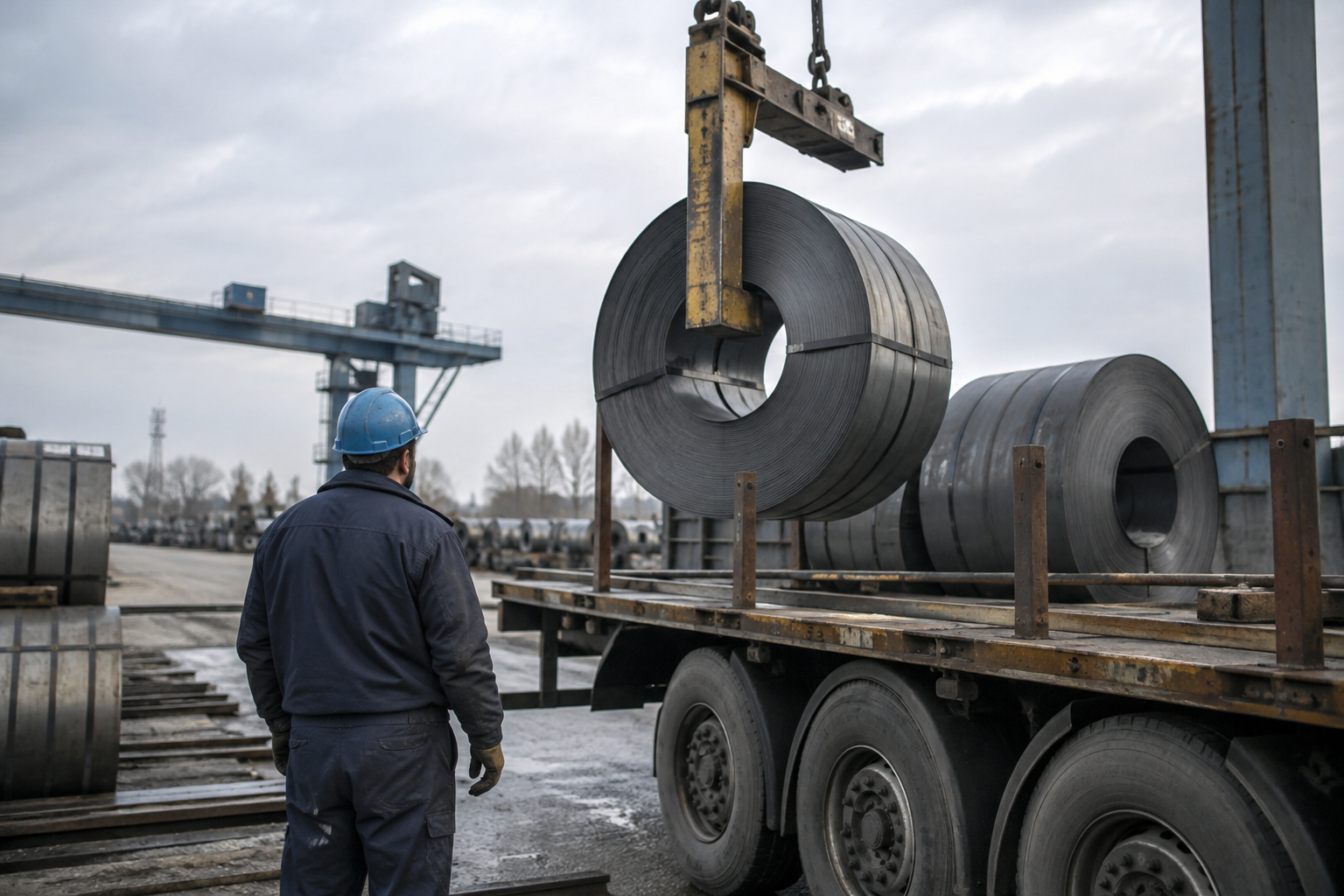
Businesses supplying the European Union face a growing gap between the information regulators demand and customs authorities’ ability to process it. Emerging Europe reports that OECD research found comprehensive border-enforcement plans accompanied fewer than one in five new environmental and social requirements. The shortfall comes as the EU’s carbon border adjustment mechanism, known as CBAM, begins creating financial liabilities for imports.
CBAM moved beyond its reporting-only phase on 1 January 2026. Emerging Europe reports that importers bringing in more than 50 tonnes annually across the covered categories — steel, aluminium, cement, fertiliser, electricity and hydrogen — must obtain authorised-declarant status. Shipment records must connect the emissions generated during production with the relevant customs classification. A European Commission update showed more than 12,000 applications by 7 January, with about 4,100 approvals.
The OECD’s report, Better Borders for Trade, Traceability and Enforcement, describes a regulatory workload that has expanded substantially. Notifications concerning environmental technical requirements increased by more than 60 per cent over a decade. Around 86 per cent of the due-diligence measures examined were introduced in 2015 or later, according to the findings reported by Emerging Europe.
Implementation remains uneven. OECD countries address only 55 per cent of the border difficulties associated with requirements covering a product’s environmental lifecycle, from raw-material extraction through production to disposal. The organisation identifies critical minerals, medical products and advanced technology goods as areas requiring particular attention. For businesses in those sectors, the findings point to administrative exposure beyond tariffs alone.
Serbia’s steel industry illustrates how production methods and dependence on EU customers intersect. Emerging Europe cites a March analysis putting emissions at the Smederevo steelworks at approximately 2.3 tonnes of carbon dioxide per tonne of hot-rolled coil. The plant sells roughly 55 per cent of its production into the EU, making European carbon requirements a significant consideration for its export business.
Chinese state-owned steelmaker HBIS acquired Smederevo in 2016 for €46 million and retained approximately 5,000 employees. One of the site’s two blast furnaces has been inactive since mid-2023. Formerly Serbia’s largest exporter, the business now ranks third, Emerging Europe reports. These details place the new carbon obligations against an existing reduction in operating capacity rather than an uninterrupted expansion.
Electricity trading provides a different test of the rules. By February, traders were reducing transactions between Western Balkan markets and the EU, according to Emerging Europe. One contributing problem was CBAM’s inability to distinguish electricity generated from coal from hydropower in real time. That limitation complicates trade even where the underlying generation sources have very different emissions profiles.
Ukraine’s steel exporters have also suffered a sharp decline in sales abroad. Emerging Europe cites September reporting by Kyiv-based consultancy GMK Center showing that exports of long steel products fell 41.7 per cent year on year in the first half of 2026. Exports of flat steel products declined by 8.1 per cent over the same period.
Research presented at a Kyiv roundtable in April estimated that lost export orders exceeded 1.1 million tonnes in the first quarter alone. Emerging Europe notes that tighter EU import quotas also contributed to the pressure. The Ukrainian figures therefore cannot be treated as a measure of CBAM’s effects in isolation: exporters were confronting restrictions on market access as well as carbon-related obligations.
OECD secretary-general Mathias Cormann argues that trade depends on reliable information moving alongside goods. In remarks reported by Emerging Europe, he warned that gathering and checking that information imposes rising costs on both companies and public authorities. His position makes the quality of administrative systems an economic issue, not simply a question of whether businesses submit the required documents.
Slobodan Minić, a special adviser to Serbia’s Fiscal Council, has estimated the country’s exporters face around €45 million in costs in 2026, increasing to between €150 million and €200 million annually by 2030. Emerging Europe reports that a substantial share would fall on HBIS’s Smederevo operation. The forecast gives Serbian suppliers a concrete longer-term cost range to consider when assessing their European business.
Bosnia’s trade minister, Staša Košarac, sought a change to the timetable. In 2025, he asked the Energy Community, the treaty organisation extending EU energy rules to neighbouring countries, to press for a CBAM postponement. Emerging Europe reports that the request did not alter the scheduled introduction of the mechanism.
The EU’s deforestation regulation has followed a different course. Environment commissioner Jessika Roswall requested a second postponement in September 2025 because the system receiving corporate due-diligence submissions lacked sufficient capacity. The regulation requires location data for individual production plots supplying commodities including cocoa, coffee, soy, palm oil and timber. Emerging Europe reports that the delay was published in the EU’s Official Journal on 23 December.
Part of the deforestation filing portal was taken offline in February for rebuilding. In her 4 May simplification review, Roswall rejected another postponement and said changes had already reduced compliance costs by around 75 per cent, according to Emerging Europe. That figure is the commissioner’s assessment, rather than an independent cost estimate presented in the reporting.
A revised deforestation information system went live in September, with large and medium-sized companies required to use it from 30 December. Emerging Europe reports that the Commission’s final scheduled training sessions are on 22 and 27 October. Separately, sales of the first CBAM certificates, covering 2026 imports, are due to begin on 1 February 2027.
Broader customs reform will take considerably longer. The European Parliament and member states agreed an overhaul in March that will establish an EU Customs Authority in Lille and replace 111 national IT systems with a shared data hub. The Council adopted its formal position on 3 September, according to Emerging Europe. The package represents the largest revision of the customs code since 1968.
The hub is scheduled to serve e-commerce from July 2028. Other traders will be able to join voluntarily from March 2031, before participation becomes compulsory in 2034. Companies planning European market entry therefore face a transition in which new regulatory duties precede the common infrastructure intended to support customs administration.
There is evidence that practical improvements can reduce the burden. Emerging Europe reports the OECD’s estimate that measures including unified submission portals, processing before goods arrive and inspections targeted by risk have lowered trade costs by up to five per cent over the past decade. The organisation also estimates that existing regulatory co-operation arrangements could benefit about $4.8 trillion of trade if governments used them fully, offering a route to improvement before the EU’s shared hub is complete.
For companies planning to sell into the EU, supplier information and emissions records are becoming part of market-entry preparation alongside pricing and distribution. Emerging Europe’s reporting shows that the compliance timetable is advancing faster than shared customs infrastructure. UK businesses targeting EU customers should assess their exposure through those European trade flows, rather than assume these are UK domestic requirements. The commercial task is to establish which obligations apply, who holds the necessary production data and how the resulting costs affect the proposed route to market.
Source
Original reporting by Emerging Europe. This report was written independently for Market Entry Wire.
Assessments taking 31 minutes or several hours expose a data-readiness gap as brands face growing demands for evidence about their supply chains.
08 Nov
Europe’s proposed MEDIA+ budget would more than double existing funding, but national financing rules and territorial rights still constrain cross-border releases.
07 Nov

Circana figures reported by Cosmetics Business show European prestige body care gaining ground as brands bring facial skincare ingredients into body treatments.
05 Nov

Dutch agrifood biotech could generate €17bn more a year by 2040, but Invest-NL warns that approval delays and funding gaps could push growth overseas.
30 Oct

Online retailers face fines of up to 10% of worldwide turnover for pricing breaches as the CMA presses businesses to disclose compulsory delivery fees upfront.
11 Nov

The Swiss-American startup will develop its banking platform and expand its commercial team across Europe, the Middle East and Africa.
10 Nov

The Oxford spin-out will build demonstrator facilities, recruit staff and expand partnerships for a process that avoids highly hazardous hydrogen fluoride.
05 Nov