
Market Intelligence & Trends
EU supply chain rules strengthen case for shared checks
Assessments taking 31 minutes or several hours expose a data-readiness gap as brands face growing demands for evidence about their supply chains.
08 Nov

The daily brief on companies, capital and policy moving into the UK and Europe.
Circana figures reported by Cosmetics Business show European prestige body care gaining ground as brands bring facial skincare ingredients into body treatments.

By Chen Liwei, China Correspondent · London
5 November 2026 · Reported from Cosmetics Business
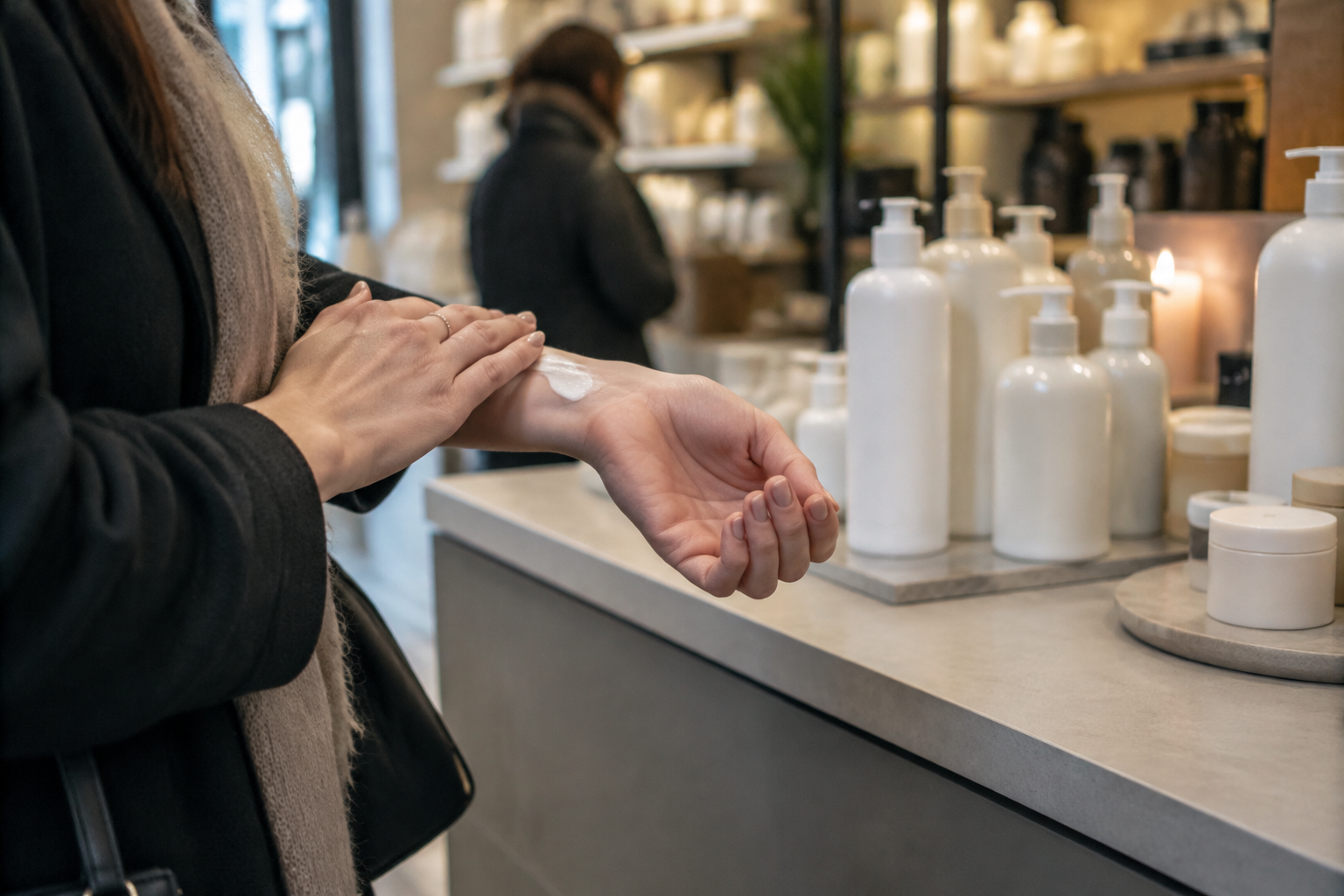
European prestige body care sales reached €523m in the year ending September 2026, up 11% by value and 8% by volume, according to Circana figures supplied exclusively to Cosmetics Business. The increase in units shows the category’s expansion extends beyond higher spending per purchase, as consumers seek more sophisticated products for skin below the face.
The UK is outpacing the wider European market in body serums. Cosmetics Business reports Circana figures showing sales growth of 27% in the UK during 2026, against 16% across Europe. Separate US data cited by the publication showed body care sales rising 16% in the first half of 2026, indicating momentum on both sides of the Atlantic.
Competition is accelerating alongside demand. Body care product launches increased 62% in 2026 compared with the previous year, according to Circana data reported by Cosmetics Business. That gives retailers a larger pool of products to consider, but also raises the challenge for suppliers seeking shelf space: entering a growing category now means competing with a rapidly expanding assortment.
Established beauty businesses are using different routes into the category. Cosmetics Business reports that fragrance brand Kayali introduced its Yum collection as an extension of scent layering. NYX Professional Makeup entered body care for the first time in its 27-year history with the Fat Oil Body Collection, built around enhancing skin’s glow. The launches bring fragrance and colour cosmetics expertise into competition with skincare-led propositions.
E.l.f. Cosmetics has also introduced its own body range, e.l.f. POP, drawing inspiration from holiday destinations and their scents, according to Cosmetics Business. Together, these entries widen the competitive field beyond businesses traditionally associated with moisturisers and body cleansing. For prospective entrants, the relevant competitor set increasingly includes brands with established audiences elsewhere in beauty.
New specialist brands are approaching the opportunity from another direction. US business Dewsy was co-founded by chief executive Kathy Widmer, who previously led Johnson & Johnson’s Americas division. Cosmetics Business reports that Dewsy combines ingredients associated with facial skincare, clinical testing and advanced delivery systems at prices positioned between mass-market and prestige products.
Dewsy’s latest product, Bounce Back Body Cream, contains 0.1% retinol, copper peptides and five ceramides, according to the publication. The brand positions the formulation around skin renewal and hydration, with intended benefits for collagen production and cell turnover. Disclosing the retinol concentration gives shoppers a concrete formulation detail rather than relying solely on a broad anti-ageing claim.
Large consumer goods brands are adapting familiar formats too. Cosmetics Business describes Vaseline’s Gluta Hya Smoothing Serum Burst Lotion as combining three acids, 4D hyaluronic acid and niacinamide in a formula that changes from a serum-like consistency to a watery texture. The reported product claims include improved texture within seven days and greater radiance within 14 days, bringing timed performance claims into everyday body moisturising.
Dove has taken the serum concept into cleansing with its Body + Mind Serum Body Wash range. Cosmetics Business reports that the range combines a skincare-inspired formulation with fragrances positioned around mood benefits. Matt Maxwell, business unit director for health and beauty at Worldpanel by Numerator, told the publication it had generated £2m in sales since launch and ranked tenth among that year’s health and beauty new product introductions.
Grace Vernon, director of international retail partnerships at Boots Ignite and Trends, told Cosmetics Business that shoppers are transferring knowledge acquired through facial skincare to their body care purchases. She identified acids, peptides and ingredients supporting the skin barrier as areas of growing interest. Her assessment points to a more ingredient-literate audience, capable of comparing products on more than fragrance or basic moisturising benefits.
Vernon also highlighted packaging as part of the category’s development, alongside new textures and formats. In her account to Cosmetics Business, these features are helping turn a practical purchase into something consumers enjoy using. That gives brands several ways to distinguish a product, although presentation must work alongside the benefits shoppers now expect from the formulation.
Mathilde Lion, Circana’s industry analyst and executive director of beauty in Europe, offered a spending perspective. She told Cosmetics Business that consumers previously concentrated prestige purchases on facial skincare and fragrance, whereas body products increasingly sit within beauty and wellness routines. Her assessment suggests the opportunity involves changing where consumers allocate premium spending, rather than simply replacing one standard lotion with another.
Dewsy’s commercial chief and co-founder Barry Bruno expects consumers to adopt multiple body care steps, including applying a serum before a lotion, Cosmetics Business reports. He also argued that product discovery is less concentrated among a few dominant brands. For smaller suppliers, that position offers an encouraging route to market: a product addressing a clearly defined concern may find an audience without requiring an extensive range at launch.
Firming products are one area to watch as the category moves towards 2027. US consumer trend data from Spate, reported by Cosmetics Business, showed interest in “body firming cream” rising 45% year on year in the period ending August 2026, while “firming body lotion” increased 31%. The publication places that growth alongside wider GLP-1 drug use and concerns about skin following rapid weight loss. The figures measure interest, however, not European sales or proof of product effectiveness.
Searches for body contouring and cellulite also increased, with further growth expected over the following 12 months, according to Cosmetics Business. For companies considering UK or European expansion, the US findings provide a direction for local consumer research rather than a ready-made demand forecast. Establishing which concerns shoppers prioritise would help determine whether a firming proposition merits a dedicated product or a supporting role within a broader range.
Body milks offer a different development route. Cosmetics Business identifies renewed attention in 2026 for fluid, lightweight moisturisers, following interest in milk-inspired facial toners, sunscreens and fragrances. The format creates room to compete through application and finish rather than ingredient novelty alone, particularly for businesses looking to make daily moisturising feel easier and more appealing.
Vitamin C is another ingredient gaining ground. Amika chief marketing officer Nilofer Vahora told Cosmetics Business that its familiarity as an antioxidant associated with brightness and more even-looking skin makes it relevant to treatment-focused body products. Separately, Vernon described demand for an all-over glow as increasingly centred on hydrated, healthy-looking skin rather than added shimmer. That distinction matters for brands deciding between a treatment proposition and an immediate cosmetic finish.
An adjacent shift is emerging in nail care. Cosmetics Business cites global Spate data showing average monthly search popularity for the nail category declining 3.9% year on year across Google, TikTok and Instagram, with nail services and salon treatments down 2.2%. Against that backdrop, brands are developing nail-health products using skincare ingredients and new formats. For businesses planning European assortments, it is a useful warning against treating beauty as a single growth market: opportunities vary sharply by category and consumer concern.
For companies entering the UK or Europe, body care offers growing demand alongside increasingly crowded shelves. The UK’s 27% increase in body serum sales provides a particularly clear signal for targeted treatments, while the 62% rise in launches underlines the need for differentiation. Cosmetics Business’s reporting points to several entry routes: specialist ingredients, distinctive textures, fragrance expertise and accessible premium pricing. Choosing a defined consumer concern and supporting product claims with evidence offers a sharper proposition than launching another broadly positioned moisturiser.
Source
Original reporting by Cosmetics Business. This report was written independently for Market Entry Wire.
Assessments taking 31 minutes or several hours expose a data-readiness gap as brands face growing demands for evidence about their supply chains.
08 Nov

Europe’s proposed MEDIA+ budget would more than double existing funding, but national financing rules and territorial rights still constrain cross-border releases.
07 Nov

Dutch agrifood biotech could generate €17bn more a year by 2040, but Invest-NL warns that approval delays and funding gaps could push growth overseas.
30 Oct

A Polish review and economic freedom rankings highlight how national implementation can shape business conditions across Europe, Emerging Europe reports.
26 Oct

Online retailers face fines of up to 10% of worldwide turnover for pricing breaches as the CMA presses businesses to disclose compulsory delivery fees upfront.
11 Nov

The Swiss-American startup will develop its banking platform and expand its commercial team across Europe, the Middle East and Africa.
10 Nov

The Oxford spin-out will build demonstrator facilities, recruit staff and expand partnerships for a process that avoids highly hazardous hydrogen fluoride.
05 Nov

A draft UK-EU food trade agreement would remove costly certificates and reopen export routes, with ministers forecasting £5.1bn in eventual annual economic benefits.
03 Nov