Market Intelligence & Trends
EU supply chain rules strengthen case for shared checks
Assessments taking 31 minutes or several hours expose a data-readiness gap as brands face growing demands for evidence about their supply chains.
08 Nov

The daily brief on companies, capital and policy moving into the UK and Europe.
Dutch agrifood biotech could generate €17bn more a year by 2040, but Invest-NL warns that approval delays and funding gaps could push growth overseas.

By Sophie Lindqvist, Policy Correspondent · Brussels
30 October 2026 · Reported from EU-Startups
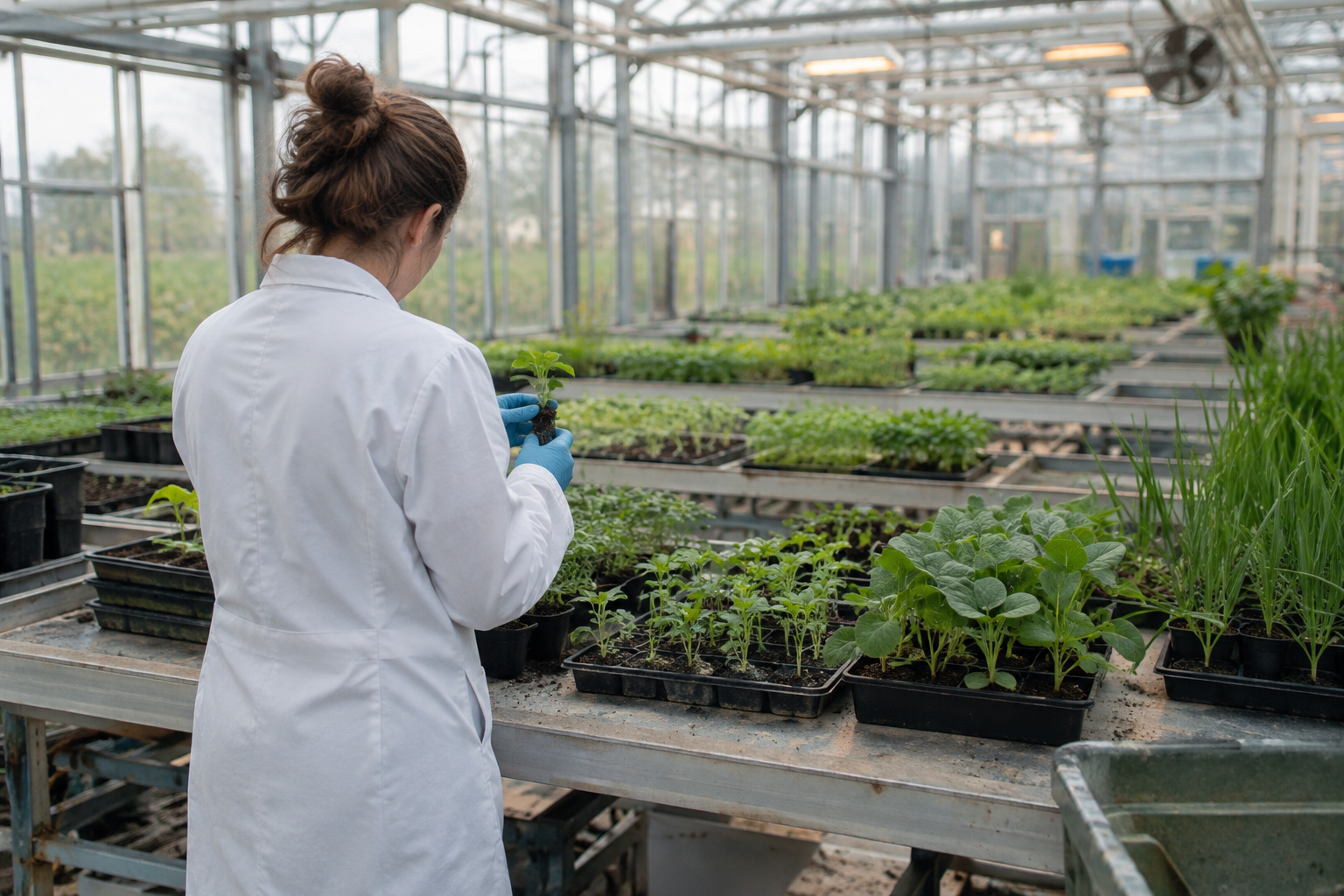
The Netherlands could secure approximately €17bn in additional annual agrifood biotechnology revenue by 2040 if it tackles obstacles to bringing new products to market, according to EU-Startups’ reporting on a study by national investment institution Invest-NL. Without changes to regulation, funding and commercialisation support, competing countries could capture much of that growth.
Invest-NL’s report, Deep Dive Agrifood Biotech, sets out sharply different outcomes. Under favourable conditions, annual Dutch sector revenue could reach roughly €25bn by 2040. Maintaining current conditions would leave it at around €8bn–€9bn. These are conditional estimates, rather than a forecast that the larger market will materialise automatically.
The research draws on interviews with more than 150 entrepreneurs, investors, researchers and policymakers, together with investment data covering 2010 to April 2026, EU-Startups reports. It examines three fields: crop genetics and seed breeding, biological products used in agriculture, and food ingredients made through biotechnology.
A broader biotechnology comparison illustrates the commercialisation challenge. Figures from the Netherlands Organisation for Applied Scientific Research, TNO, cited in the study put the Netherlands’ share of global biotech startups at 3.3%, against 1.3% for scale-ups. Those figures cover biotechnology more widely, not agrifood alone, but indicate a gap between establishing businesses and building larger companies.
The Dutch starting position remains strong: agricultural research institutions, established seed businesses and an advanced food production sector give entrepreneurs access to scientific and industrial expertise. The difficulty identified in EU-Startups’ account is converting those assets into businesses able to compete internationally, rather than a shortage of promising technology.
Biological crop protection demonstrates how market access can influence expansion decisions. European approval for a new product can take eight to ten years under frameworks largely developed for chemical treatments. Some companies consequently pursue Brazil or the United States first, where they can commercialise more quickly, according to the report. The market for biological crop protection could grow seven- to tenfold by 2040.
Food biotechnology faces a different combination of delays and capital requirements. EU-Startups reports that European approval for novel ingredients can take one to three years longer than in the United States. A first commercial factory can require tens or hundreds of millions of euros, making the transition from development to production a substantial financing exercise. The importance of funding that transition also features in Volare’s €7.1m factory ramp-up and European expansion.
Recent Dutch deals nevertheless show investors backing several routes to agricultural innovation. In August 2026, Eindhoven-based VitalFluid raised €17.2m in a round co-led by Invest-NL and Alder Tree Investments. EU-Startups reported that the money would accelerate commercialisation of plasma-activated water technology, offering growers an alternative to chemical crop protection.
Seed and crop technologies have attracted capital too. Wageningen-based Aardaia raised €5m in July to develop its genomics-led breeding platform and a protein-rich tuber. In September, Nijmegen-based Gravity Gardens secured €2.6m to expand its chemical-free seed activation technology, according to EU-Startups.
In food ingredients, Vivici received €12.5m in European Innovation Council backing in June to increase the supply and commercial reach of its precision-fermented dairy proteins. EU-Startups also reported last year on Revyve’s nearly €24m Series B for expanding production of yeast-based ingredients that can substitute for eggs. Revyve had already commissioned its first production facility in the Netherlands.
Other European markets are attracting investment in competing technologies. France’s Agriodor raised €15m in April for natural scent-based pest management, while Denmark’s Mycoverse secured €2.4m in March for fungal alternatives to chemical pesticides, EU-Startups reports. These deals place additional capital behind businesses pursuing the same broad opportunity in lower-chemical agriculture.
Competition extends to fermentation. French precision fermentation companies Verley and Standing Ovation raised €32m and €30m respectively in 2026. Belgium’s MAASH obtained €12.15m through a package combining equity and public financing for industrial-scale mycoprotein production. The announcements demonstrate active investment elsewhere in Europe; they do not establish that the Netherlands has already surrendered its lead.
Invest-NL’s position is that Dutch success should not be measured by whether every manufacturing stage stays within national borders. According to EU-Startups, the institution recommends protecting valuable knowledge, intellectual property, companies and specialist capabilities while using production networks elsewhere in Europe when appropriate. That approach would allow domestic commercial strength to coexist with cross-border manufacturing.
On regulation, the report explicitly rejects a trade-off between faster approval and product safety. Its proposed improvements include guidance earlier in development, more predictable assessment processes and opportunities to test products in real-world settings. The emphasis is on making the route through regulation clearer, not removing the requirement to demonstrate safety.
Fermentation-derived food ingredients receive a separate assessment of their potential. Invest-NL estimates that favourable conditions could support around €8bn in annual Dutch revenue by 2040, compared with approximately €2bn under existing policies, EU-Startups reports. This is a segment-specific estimate within the wider agrifood biotechnology opportunity, rather than an additional sum to add to the sector total.
Invest-NL proposes indicative public financing capacity of €650m–€1.1bn between 2026 and 2030, according to EU-Startups. The proposed support would cover research, improvements to regulatory processes, infrastructure and industrial scale-up. It is a recommendation for financing capacity, not an announcement that the full amount has been committed or made available to companies.
The institution’s ambitions for 2030 include doubling the number of agrifood biotechnology ventures and cutting time to market to one-third of its current level. It also wants five internationally competitive companies capable of raising more than €100m each. That fundraising ambition describes the scale of business Invest-NL wants to foster, rather than five completed investment rounds.
For companies planning European expansion, the practical implication is to assess regulatory access and production financing together before choosing a launch sequence. A market may offer strong research partners without offering the quickest path to sales. The findings concern Dutch capabilities and European approval processes; they do not establish a separate UK timetable or a UK regulatory advantage.
For businesses entering Europe, the Invest-NL findings reported by EU-Startups put regulatory timing and factory finance at the centre of expansion planning. Dutch research expertise and recent investment offer potential partners and capabilities, but neither guarantees a quick commercial launch. Companies need to distinguish where they develop technology, where they manufacture and where they first seek customers. Invest-NL’s proposed approach leaves room for European production partnerships while retaining strategic assets in the Netherlands. The report does not provide a separate assessment of UK market access.
Source
Original reporting by EU-Startups. This report was written independently for Market Entry Wire.
Assessments taking 31 minutes or several hours expose a data-readiness gap as brands face growing demands for evidence about their supply chains.
08 Nov

Europe’s proposed MEDIA+ budget would more than double existing funding, but national financing rules and territorial rights still constrain cross-border releases.
07 Nov

Circana figures reported by Cosmetics Business show European prestige body care gaining ground as brands bring facial skincare ingredients into body treatments.
05 Nov

A Polish review and economic freedom rankings highlight how national implementation can shape business conditions across Europe, Emerging Europe reports.
26 Oct

Online retailers face fines of up to 10% of worldwide turnover for pricing breaches as the CMA presses businesses to disclose compulsory delivery fees upfront.
11 Nov

The Swiss-American startup will develop its banking platform and expand its commercial team across Europe, the Middle East and Africa.
10 Nov
The Oxford spin-out will build demonstrator facilities, recruit staff and expand partnerships for a process that avoids highly hazardous hydrogen fluoride.
05 Nov