Greece takes its technology investment pitch to San Francisco
Greece is courting technology founders and investors with changes to stock-option taxation, incentives for returning Greek workers and investment in computing infrastructure. Prime Minister Kyriakos Mitsotakis presented the package to around 250 entrepreneurs, investors and technology professionals in San Francisco, according to TechCrunch, while acknowledging that governments are not ready for the pace of AI-driven disruption.
The September 2026 gathering was hosted by Endeavor Greece, part of the international non-profit organisation supporting entrepreneurs in emerging and growth markets. Mitsotakis used the visit both to encourage technology businesses to establish operations in Greece and to learn from Silicon Valley companies. His itinerary included visits to Tesla and Sequoia Capital.
For employers considering Greece, Mitsotakis highlighted revised tax treatment of stock options and less restrictive labour rules, TechCrunch reported. The source did not specify the applicable rates or explain the individual labour-law changes, leaving companies to assess how those measures would affect their own recruitment and employment arrangements.
Returning Greeks can receive substantially reduced taxes for up to seven years, according to Mitsotakis. The incentive sits within a broader effort to bring back people who left during the country's debt crisis, when limited opportunities pushed many younger citizens to seek work abroad.
Greece also has several visa programmes intended to attract people from overseas. However, when TechCrunch asked how their success was measured, Mitsotakis acknowledged that application processing still needed improvement. For businesses recruiting internationally, that makes administrative delivery a consideration alongside the incentives themselves.
EU recovery funding underpins Greece’s digital investment
Mitsotakis said a substantial share of the approximately €36 billion Greece received through the EU's post-pandemic recovery fund had gone towards digital infrastructure, according to TechCrunch. One example was an online government portal designed to let residents complete official paperwork without queuing in person.
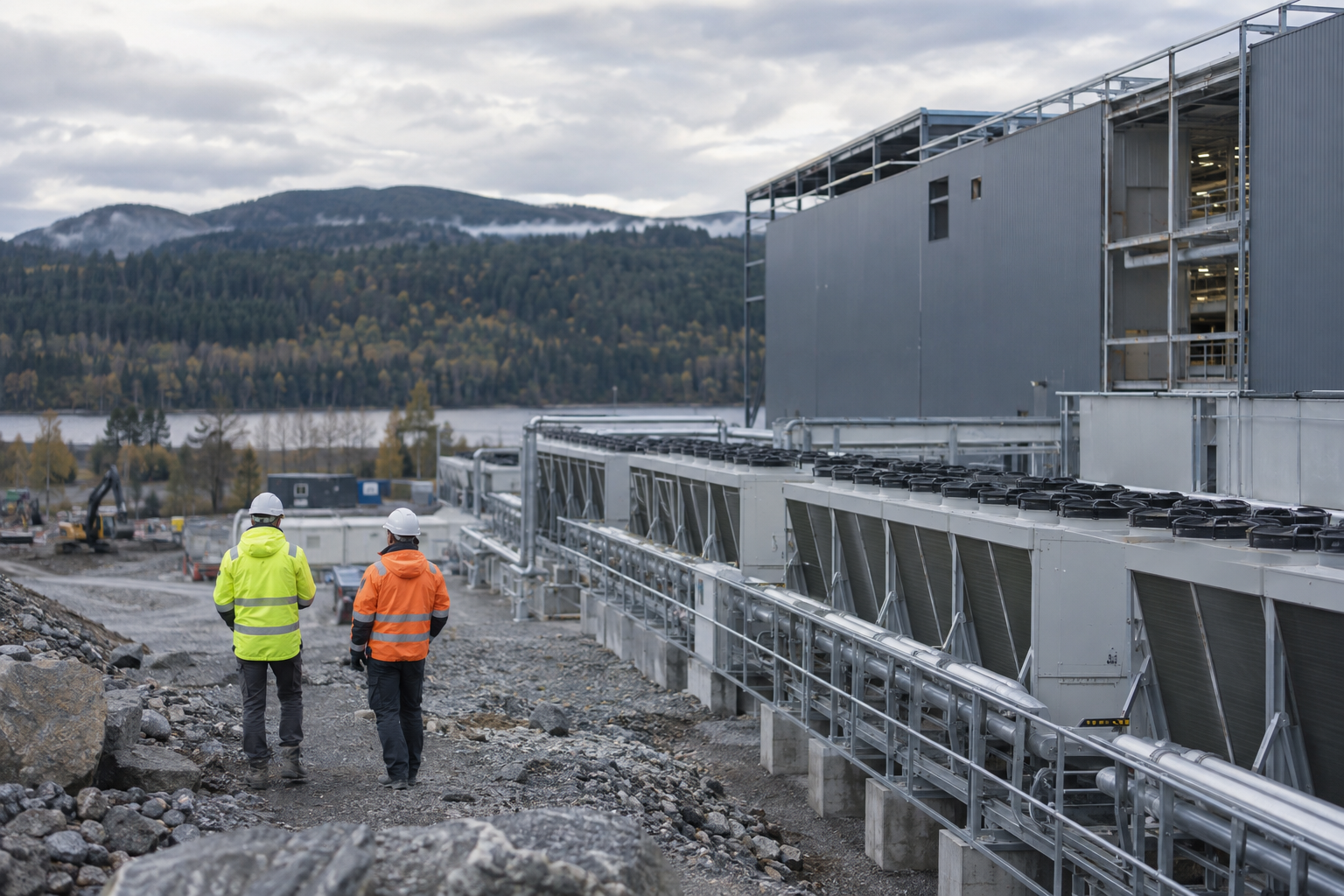
The investment programme also includes a supercomputer in Lavrio, a port town in Greece, assembled with assistance from Hewlett Packard Enterprise. Mitsotakis described the machine as infrastructure for AI development and scientific research, adding a computing project to the country's efforts to attract technology activity.
Greece's public investment sits within a wider European market for government-backed digital services. Market Entry Wire has separately reported on Cycloid joining the European Commission’s €180m cloud framework, another example of public institutions creating commercial opportunities for technology suppliers.
The prime minister's investment pitch also drew on Greece's financial recovery. He said the country was reducing its debt at a record pace and borrowing more cheaply than the United States. TechCrunch reported Greek 10-year government bond yields of around 4.3%, against approximately 5% for US Treasuries at the time of publication.
That comparison requires context: lower interest rates across the eurozone explain part of the gap, TechCrunch noted. Nevertheless, Greece's borrowing conditions have changed sharply since 2012, when its government bond yields exceeded 40% during the debt crisis.
Large technology companies are already developing infrastructure in the country. Microsoft is building a group of data centres near Athens, while AWS recently announced an agreement with Greece's largest utility for what was described as the country's biggest data centre, in a former coal-producing region, TechCrunch reported.
Mitsotakis backs investment but questions AI readiness
Mitsotakis told TechCrunch that Greece had not experienced significant opposition to data-centre development, contrasting its position with resistance elsewhere over electricity and water consumption. He said the projects in the former coal region were welcomed, presenting local acceptance as part of Greece's appeal to infrastructure investors.
He also described a change in the relationship between Greek public universities and businesses. Institutions that he characterised as historically hostile to corporate involvement were now producing start-ups, according to his account. That shift offers another potential source of founders and technical expertise for the ecosystem he wants to rebuild.
On education, Mitsotakis pointed to a Greek pilot with OpenAI focused on reducing teachers' administrative workload. He also saw potential in personalised AI tutors, but argued that their value depended on pupils continuing to acquire fundamental skills rather than allowing software to replace the effort involved in learning.
Students were already using chatbots to complete homework, he warned. Beyond the classroom, Mitsotakis questioned what children's relationships with AI companions could mean for their development. “Sometimes I feel that we’re already fighting yesterday’s battle,” he told TechCrunch, suggesting that policy debates about existing platforms might be overtaken by newer technologies.
His assessment of employment disruption was similarly direct. AI-related job displacement would happen, he said, and “no government and no society is prepared for the speed with which it will happen”, according to TechCrunch. The warning placed workforce adaptation alongside investment promotion as an unresolved policy challenge.
Mitsotakis also supported calls from some frontier AI laboratory leaders for development to slow down. He argued that policymakers should take developers' uncertainty about model behaviour and self-improvement seriously. He expected further regulation and believed the United States would have a major role in determining its shape.
Computing capacity and new rules approach in 2027
The Lavrio supercomputer is expected to become operational within months, Mitsotakis told TechCrunch. That is the clearest near-term infrastructure milestone for AI businesses and researchers in his pitch, although the report did not set out access arrangements, pricing or eligibility for commercial users.
Greece is also due to regain developed-market status from index provider MSCI in 2027, according to TechCrunch. Mitsotakis presented the planned reclassification as evidence that international investors increasingly regard Greece as a normal investment destination rather than an exceptional case defined by its financial crisis.
A ban on social-media use by children under 15 is scheduled to take effect in January 2027. For consumer technology companies entering Greece, the measure establishes an approaching regulatory change; the source did not detail enforcement arrangements or say whether AI companion services would fall within its scope.
Mitsotakis suggested that increasingly difficult access to US work visas could encourage founders to hire in Greece instead. For companies building European teams, his proposition is therefore not limited to relocation: it also positions Greece as a recruitment base for businesses whose headquarters may remain elsewhere.
The prime minister was due to continue to the UN General Assembly in New York later that week. He also offered Greece as a venue for discussions bringing technology developers together with social scientists, philosophers and historians to examine AI's consequences. No date or formal event was announced.