
Expansion Funding
Light Frame raises $5.1m to grow wealth software business in EMEA
The Swiss-American startup will develop its banking platform and expand its commercial team across Europe, the Middle East and Africa.
10 Nov

The daily brief on companies, capital and policy moving into the UK and Europe.
The Spanish orthodontics group will invest in its AI platform and deepen its presence in Germany, the Netherlands and the UK.

By Priya Raman, South Asia Correspondent · London
27 October 2026 · Reported from EU-Startups
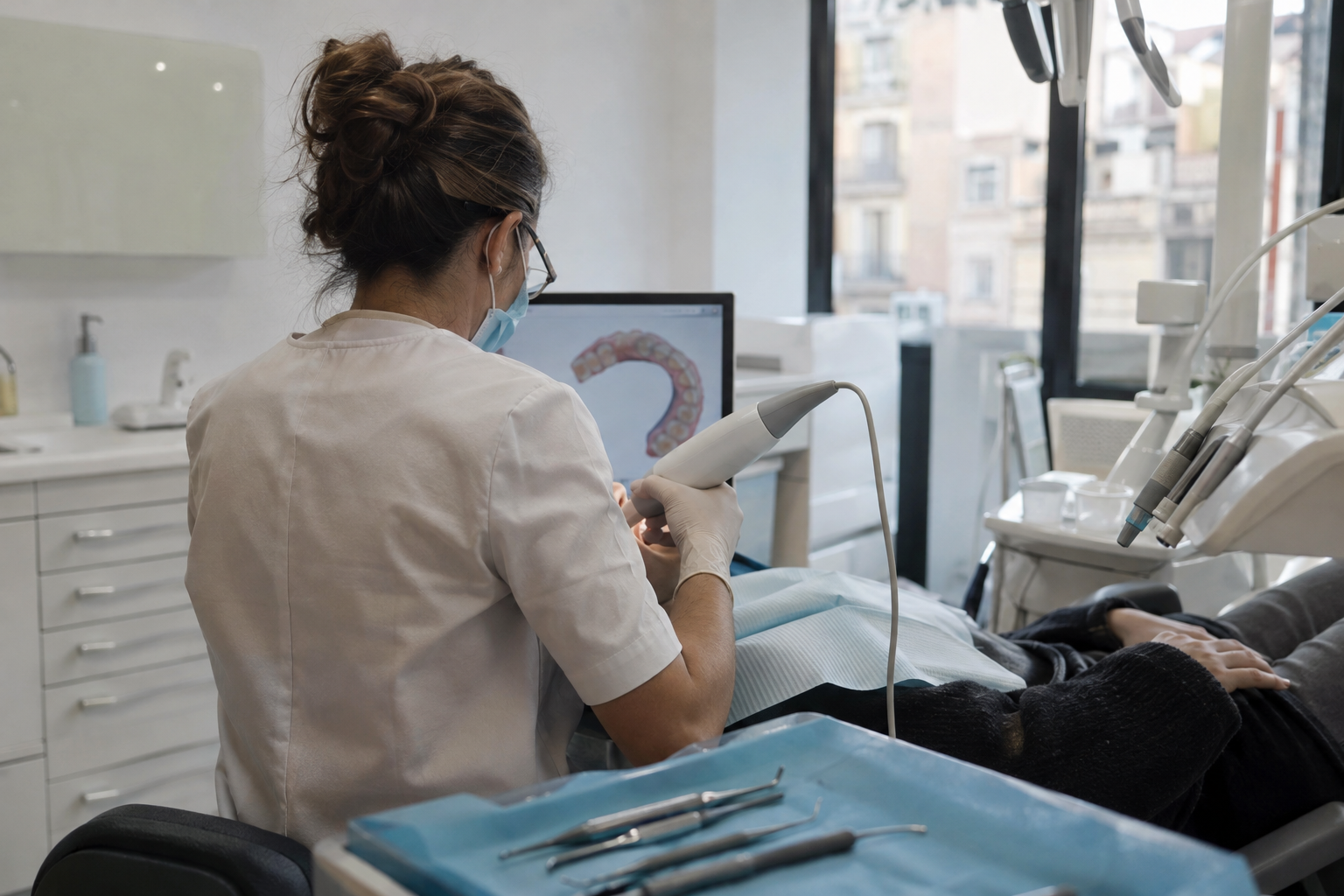
Spanish orthodontics company Impress has signed a €40 million venture debt agreement with the European Investment Bank to support European expansion and investment in its artificial intelligence platform, EU-Startups reports. The financing will support technology development across a network of more than 110 clinics worldwide.
The agreement gives Impress debt financing for its next stage of growth, rather than a new equity investment. Its expansion programme combines spending on the technology used to manage orthodontic treatment with a push into Northern European markets, building on its established business in Southern Europe.
According to EU-Startups, the proprietary platform brings together several stages of care: three-dimensional scans taken inside clinics, AI-assisted treatment planning and remote monitoring through a mobile app. The development programme is intended to connect the patient's treatment journey within one system, rather than treating clinical appointments and monitoring between visits as separate processes.
Vladimir Lupenko, Diliara Lupenko and Khaled Kasem founded Impress in Barcelona in 2019. The company specialises in invisible orthodontics, combining treatment at dedicated clinics with technology that allows patients' progress to be monitored outside appointments, EU-Startups reports.
Impress now operates in 10 countries across Europe and the United States and has treated 500,000 patients globally. Spain accounts for 22 of its clinics, while Spain, Portugal and Italy are its principal markets. That footprint provides the operating base for the company's next international growth phase.
The EIB agreement follows a financing announcement of more than €110 million in 2024. According to EU-Startups, that earlier funding supported European expansion after Impress acquired DrSmile, making the latest loan a further step in a growth strategy that has already included acquisition-led development.
Impress reported positive EBITDA and revenue of €103 million for the previous year, with sales increasing by 32%, EU-Startups reports. Those figures put the new financing alongside an existing business generating substantial revenue, rather than a company still preparing to commercialise its service. The source does not give an EBITDA figure.
Other European dental technology businesses have also attracted financing in 2026. EU-Startups reports that Paris-based DentalMonitoring secured €84 million for its AI orthodontic monitoring platform, Montpellier-based Lupin Dental raised €15 million for dental robotics and Belgium's Relu attracted €1.51 million for AI-supported dental workflows.
In Spain's wider healthcare technology market, Madrid-based Tucuvi raised €17 million for voice-AI services and Barcelona's Health Force secured €4.2 million for hospital automation, according to the same outlet. These deals cover different parts of healthcare delivery, from patient communication to administrative and clinical processes.
Vladimir Lupenko, Impress's co-founder and chief executive, told EU-Startups that the company was created to bridge the divide between costly orthodontic care requiring frequent appointments and home-based alternatives with insufficient medical supervision. He said its AI engine draws on a global database of 500,000 patients and claimed the technology can increase clinic efficiency tenfold while cutting in-person visits by 80%. These are company claims reported by the outlet, rather than independently verified performance measures.
Lupenko also presented EIB support as validation of Impress's approach and a stronger foundation for establishing its model across Europe. His position links the financing to institutional credibility as well as the capital available for investment.
María Romano, head of the EIB Group Office in Spain, emphasised the potential for digital healthcare to improve service quality and efficiency, EU-Startups reports. She framed the agreement as support for innovative European growth companies using AI, with the broader aim of strengthening Europe's position in healthcare technology.
Impress's next expansion phase will focus mainly on Germany, the Netherlands and the UK, where it has operated since 2023, according to EU-Startups. The plan is therefore to develop an existing presence in those markets, not make first-time entries. The source does not specify new clinic numbers or a country-by-country opening timetable.
Further technology development will build on tools including Impress's autonomous smile simulator. EU-Startups reports that the AI tool generates a visualisation of a patient's smile before and after treatment in three seconds without manual intervention. Its in-clinic scanning technology is also intended to improve predictions of tooth movement compared with traditional moulds.
For 2026, Impress expects revenue of around €145 million, which it describes as approximately 40% growth, EU-Startups reports. That remains a forecast: the next commercial milestone will be whether the company can deliver its projected sales increase while extending its Northern European business and developing the technology supporting patient care.
For companies expanding into the UK and Europe, Impress offers an example of venture debt supporting both technology development and growth across an established clinical network. Its Northern European strategy centres on countries where it already operates, rather than new market launches. The combination of physical clinics and remote monitoring also highlights the operational demands of healthcare expansion: growth depends on delivering supervised care as well as developing software, with financing supporting both parts of the model.
Source
Original reporting by EU-Startups. This report was written independently for Market Entry Wire.
The Swiss-American startup will develop its banking platform and expand its commercial team across Europe, the Middle East and Africa.
10 Nov

The Oxford spin-out will build demonstrator facilities, recruit staff and expand partnerships for a process that avoids highly hazardous hydrogen fluoride.
05 Nov

Practica Capital led the round, with Inventure participating, as Roleo targets European technology professionals and develops broader career support.
02 Nov

The Finnish insect-protein producer has completed a €15m plant in Pori and secured fresh funding to increase output and prepare further factories.
26 Oct

Online retailers face fines of up to 10% of worldwide turnover for pricing breaches as the CMA presses businesses to disclose compulsory delivery fees upfront.
11 Nov

Assessments taking 31 minutes or several hours expose a data-readiness gap as brands face growing demands for evidence about their supply chains.
08 Nov

Europe’s proposed MEDIA+ budget would more than double existing funding, but national financing rules and territorial rights still constrain cross-border releases.
07 Nov

Circana figures reported by Cosmetics Business show European prestige body care gaining ground as brands bring facial skincare ingredients into body treatments.
05 Nov