
Expansion Funding
Light Frame raises $5.1m to grow wealth software business in EMEA
The Swiss-American startup will develop its banking platform and expand its commercial team across Europe, the Middle East and Africa.
10 Nov

The daily brief on companies, capital and policy moving into the UK and Europe.
The Finnish insect-protein producer has completed a €15m plant in Pori and secured fresh funding to increase output and prepare further factories.

By Tomás Ferreira, Europe Correspondent · Berlin
26 October 2026 · Reported from Tech.eu
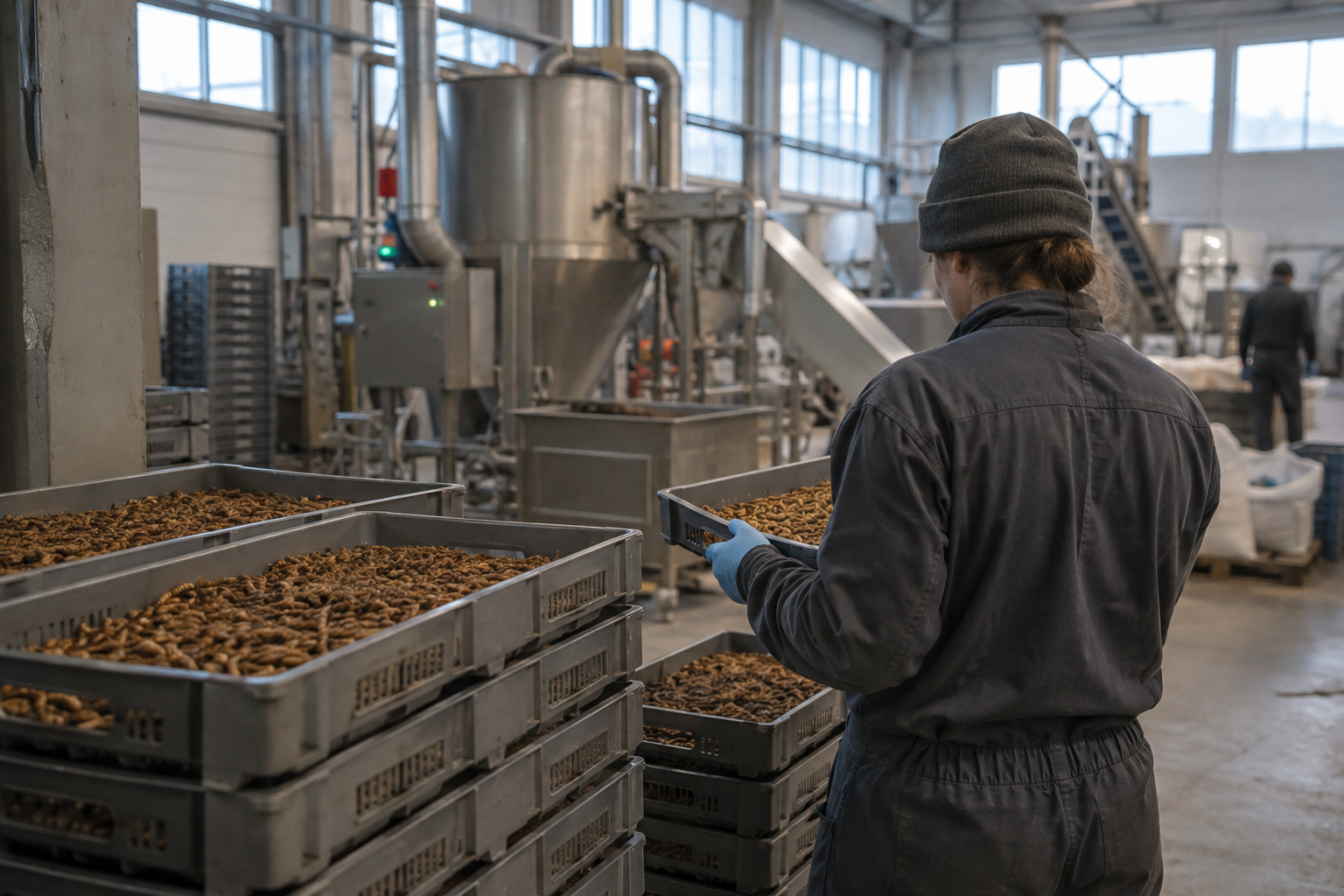
Finnish insect-protein producer Volare has secured €7.1m to increase production at its first industrial plant and prepare additional factories, Tech.eu reports. The financing was arranged through Springvest, with Maki.vc among the new and returning investors backing the business. It gives Volare fresh capital as the company moves from demonstrating its technology to running a substantially larger manufacturing operation.
The completed factory, named Volare 01, occupies 10,000 square metres in Pori, Finland. According to Tech.eu, its annual production targets are up to 5,000 tonnes of insect protein and 2,000 tonnes of insect oil. Construction met the planned delivery date and stayed within a €15m capital expenditure budget; those figures concern the factory project, rather than the latest funding round.
Volare has already secured buyers for a substantial portion of the plant’s capacity, Tech.eu reports. Its offtake partners include aquaculture feed supplier Skretting and an unnamed major international chemicals company. Skretting began testing Volare’s protein early in their relationship, giving the producer an established commercial connection as it prepares to increase output.
Established in 2021, Volare commercialises technology developed through research at VTT Technical Research Centre of Finland. The business uses black soldier flies to turn residual materials from food manufacturing into protein, oil and fertiliser. Tech.eu reports that this approach uses material already generated by the food industry rather than requiring virgin inputs for production.
The founding team brings together agricultural, engineering and waste-management experience. Chief scientific officer Tuure Parviainen trained as an agronomist, researched biomass at the University of Helsinki and worked in biogas. Chief technology officer Matti Tähtinen worked on energy and circular-economy research at VTT. Chief executive Jarna Hyvönen previously developed services at Finland’s largest waste-management company, including work to cut restaurant food waste, according to Tech.eu.
Volare’s demonstration plant produced commercially for more than four years before being transferred to the Pori site, where it remains in operation. Tech.eu describes the new factory as a 1,000-fold increase in scale using the same underlying process. The smaller operation also gave prospective customers somewhere to inspect production and obtain ingredients for product testing before committing to commercial launches.
Products containing Volare protein have been sold since 2022. Tech.eu identifies dog treats developed with Alvar Pet, insect-based cat food from Vafo Group brand Dagsmark, and rainbow trout feed developed with Alltech Fennoaqua. The ingredient has also been used in organic poultry feed. Volare’s protein meal has digestibility above 90 per cent, according to the report.
The expansion comes after several European insect-protein businesses ran into financial trouble. Tech.eu reports that France’s Ÿnsect entered judicial liquidation in 2025 after raising more than €600m. The French government cited technical problems, delayed construction, spending overruns and commercial difficulties. Denmark’s ENORM, which raised €50m in 2022 for a black soldier fly plant, was declared bankrupt on 30 October 2025 following an unsuccessful restructuring.
A different manufacturing model did not protect Germany’s FarmInsect. The Munich company supplied technology for farmers to rear larvae locally using agricultural waste, but entered insolvency proceedings in 2026 and later stopped operating when no buyer emerged. According to Tech.eu, it had attracted approximately €16.2m in equity and public funding; expensive production, cheaper competing proteins and financing delays contributed to its difficulties.
Demand for alternatives nevertheless has a structural driver: pressure on marine resources. Tech.eu cites the FAO’s 2026 report, which found that 84.5 per cent of assessed marine fish stocks were either at their maximum sustainable fishing level or overfished in 2023. That constraint is relevant to feed manufacturers seeking additional protein supplies without relying on greater fishmeal production.
Speaking to Tech.eu, Hyvönen argued that failures in insect protein should not automatically be treated as evidence against the entire industry. Her assessment was that companies need several capabilities simultaneously: customers willing to buy, suitable technology, scientific expertise and effective execution. She also pointed to regulation, saying the necessary framework had not been in place before 2017.
For Volare, one practical cost decision was to reuse a former newspaper printing building. The conversion took nine months, and Hyvönen estimated that choosing an existing property avoided at least a year of work compared with new construction. She told Tech.eu that floors originally designed to carry heavy printing equipment were well suited to the company’s machinery.
Hyvönen also linked spending discipline to keeping responsibility for engineering and project management inside Volare rather than hiring external consultants for those roles. Suppliers remained involved, but the company retained control over decisions affecting both construction costs and subsequent operations. She told Tech.eu that this was particularly important when designing a first factory whose operating requirements were still highly specific to the business.
The company’s efficiency claims extend beyond construction. Tech.eu reports that Volare’s model requires between one-quarter and one-tenth of competing producers’ capital expenditure, approximately half their staffing and 30 per cent less energy for final-product processing. The Pori facility was designed for four workers per shift, with automation and established industrial equipment helping a small team cover the site.
Hyvönen described two further technical choices to Tech.eu: Volare has developed a fly strain suited to its particular feed materials, and its production processes use electricity rather than natural gas or other fossil fuels. Its patented technology and proprietary equipment designs include a dry-processing method that she said lowers energy costs while preserving ingredient quality.
Volare’s immediate operational task is commissioning the Pori plant and increasing production towards its intended capacity, according to Tech.eu. Completion of the building therefore does not mean the company is already producing at its annual target. The funding will support that transition alongside preparations for subsequent facilities.
The proposed second factory would have roughly five times Volare 01’s protein production capacity, Tech.eu reports. Hyvönen said the longer-term ambition is to establish further plants across Europe and outside it. The report does not identify the next location or give a construction timetable, leaving the geographical sequence of that expansion unspecified.
Replication is built into the technology: much of Volare’s equipment consists of smaller units that can be added repeatedly as output grows. According to Tech.eu, this has enabled the company to validate individual processes over several years rather than depend on a single leap to a much larger, untested system. For its European manufacturing plans, the approach offers a way to carry proven production methods into additional sites.
Volare does not intend to broaden its work to other insects or alternative protein sources. Hyvönen told Tech.eu that, although further product lines are possible, the small team will remain focused on black soldier flies. That decision keeps the expansion programme centred on one biological platform rather than adding another research and industrialisation challenge.
For feed and pet-food companies expanding in Europe, Volare offers a potential regional ingredient source with existing commercial applications and buyers. Its next test is operational: increasing output at Pori before replicating the manufacturing model elsewhere. Tech.eu’s reporting also highlights the demands facing new industrial suppliers, from securing customer commitments to controlling construction and processing costs. The sector’s recent failures make those details important when buyers assess long-term supply partners; funding and factory completion alone do not establish sustained production at competitive cost.
Source
Original reporting by Tech.eu. This report was written independently for Market Entry Wire.
The Swiss-American startup will develop its banking platform and expand its commercial team across Europe, the Middle East and Africa.
10 Nov
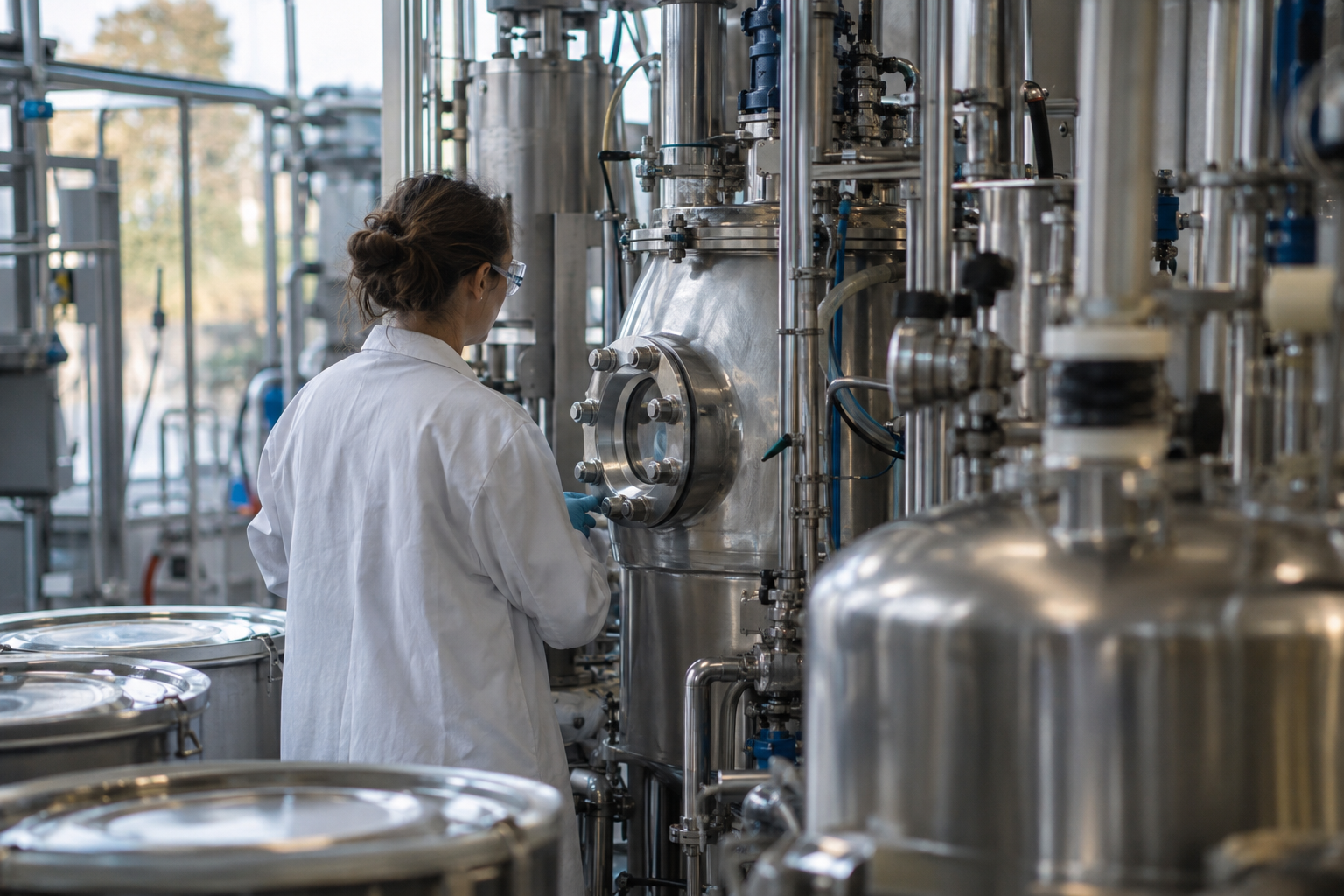
The Oxford spin-out will build demonstrator facilities, recruit staff and expand partnerships for a process that avoids highly hazardous hydrogen fluoride.
05 Nov

Practica Capital led the round, with Inventure participating, as Roleo targets European technology professionals and develops broader career support.
02 Nov

The Spanish orthodontics group will invest in its AI platform and deepen its presence in Germany, the Netherlands and the UK.
27 Oct

Online retailers face fines of up to 10% of worldwide turnover for pricing breaches as the CMA presses businesses to disclose compulsory delivery fees upfront.
11 Nov
Assessments taking 31 minutes or several hours expose a data-readiness gap as brands face growing demands for evidence about their supply chains.
08 Nov

Europe’s proposed MEDIA+ budget would more than double existing funding, but national financing rules and territorial rights still constrain cross-border releases.
07 Nov

Circana figures reported by Cosmetics Business show European prestige body care gaining ground as brands bring facial skincare ingredients into body treatments.
05 Nov