Expansion Funding
IntelliProve raises €2.7m to take health monitoring into robotics
The Belgian healthtech company will develop camera-based monitoring for humanoid robots while pursuing EU medical device certification and overseas approvals.
19 Nov

The daily brief on companies, capital and policy moving into the UK and Europe.
The Indian chip designer will fund engineering and product development as it builds its US team, hires in Europe and targets commercial production in 2027.

By Claire Dubois, Consumer & Retail Reporter · Paris
16 November 2026 · Reported from TechCrunch
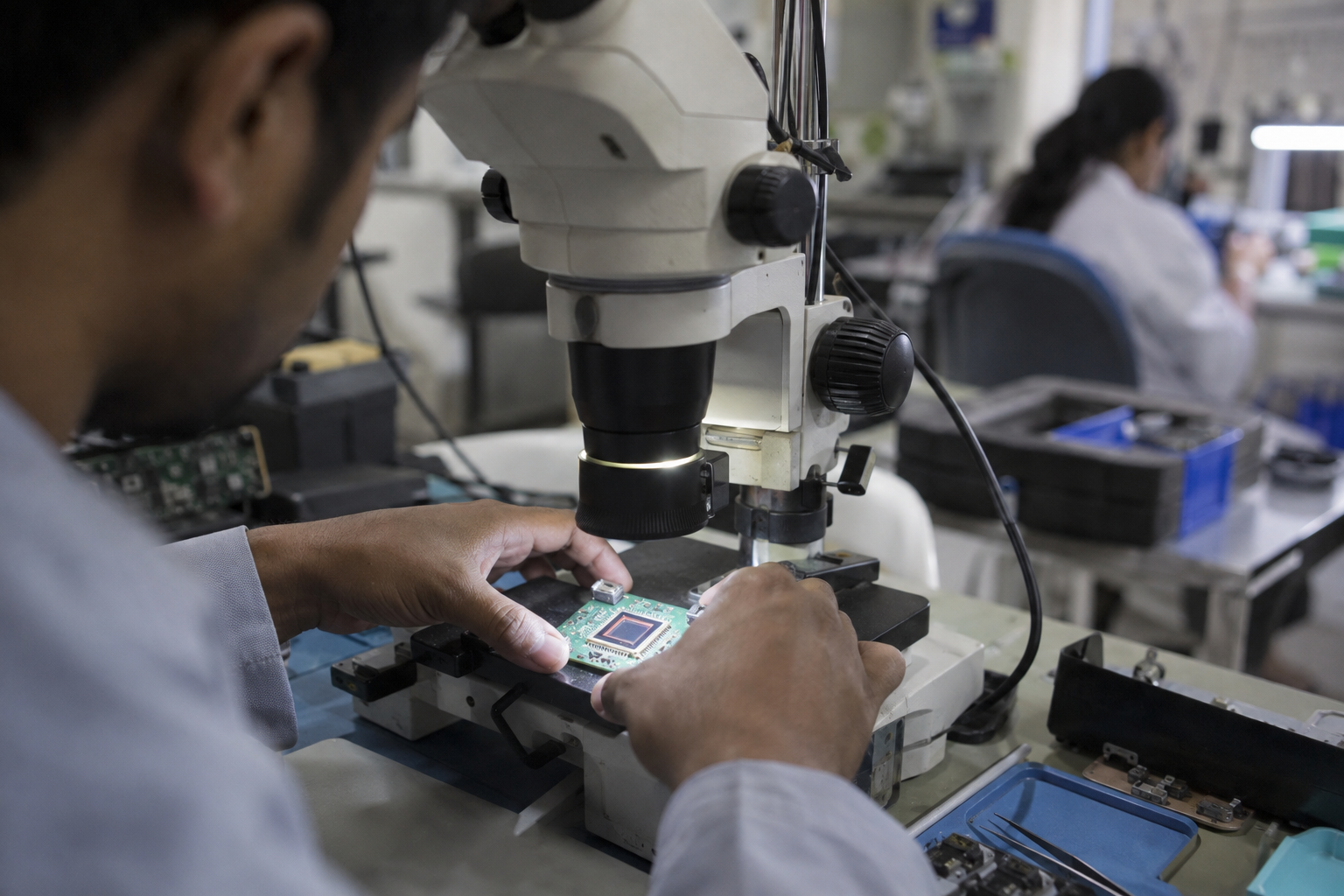
Bharat Semi has raised $24m in seed capital to develop AI-enabled image sensors and pursue international customers, TechCrunch reports. The New Delhi-based semiconductor company is targeting its first commercial production in 2027, making the investment a bridge from development towards market entry rather than funding for an established sales operation.
Info Edge Group, South Park Commons and Indus Bridge Ventures led the all-equity financing. Valour Capital, Micromax, Gaingels and individual investors also participated, according to TechCrunch. The money is earmarked for engineering recruitment, product completion and commercialisation.
Bharat Semi remains pre-revenue but says it has secured design wins with General Atomics, the US defence technology company, and India’s Kaynes Semicon. Those reported customer relationships come while its sensors are still being developed; they should not be read as evidence of revenue already flowing from commercial production.
Vrinda Kapoor and managing director Vinayak Dalmia founded Bharat Semi in late 2021. TechCrunch reports that Kapoor, a South Park Commons fellow, previously worked in healthcare technology, while Dalmia’s background includes McKinsey and private equity. Chief technology officer Boyd Fowler previously held that position at image-sensor company OmniVision.
The company’s programmable sensors are designed to capture images, process them and perform AI tasks within one chip. Bringing those functions together would reduce the need to transfer visual information to separate processors, placing more of the computing work inside the sensor itself.
India’s wider semiconductor ambitions provide the policy backdrop. According to TechCrunch, the country has committed billions of dollars to developing a domestic industry as US businesses seek supply-chain alternatives to China. India has not yet become a major chip manufacturing centre, however, leaving a distinction between its industrial ambitions and its current capabilities.
Bharat Semi’s approach is fabless: it intends to concentrate on chip design and software while contracting out manufacturing. For European businesses assessing technology suppliers, that distinction separates the location of product development from the location of production — a relevant consideration in the wider debate over Europe’s dependence on external chip and cloud suppliers.
Kapoor told TechCrunch that Bharat Semi’s integrated approach could reduce system costs by at least 70% against conventional configurations combining a separate image sensor, image signal processor and system-on-chip. That figure is the co-founder’s estimate of the technology’s potential, rather than a demonstrated saving across commercial deployments.
The company is pursuing applications in connected homes, industrial automation, surveillance and aerospace. Kapoor’s examples included air conditioners that could recognise an unoccupied room and adjust their operation, and drones able to interpret visual information without relying on more expensive computing hardware elsewhere in the system. TechCrunch did not report specific product arrangements for those examples.
Kapoor framed Bharat Semi’s ambition as building an internationally competitive technology business from India. Her stated product objective goes beyond recording images: the company wants its sensors to help systems interpret what they see, making on-chip processing central to its proposed offer to customers.
Bharat Semi employs about 75 people across India and the US, including between 10 and 12 in its American operation, TechCrunch reports. Its Santa Clara activities cover engineering and business development. Kapoor said the company plans to increase US staffing to around 20 by mid-2027, expanding both its technical capacity and its presence near prospective customers.
The company has also started recruiting engineers in Europe. That is its clearest stated European expansion activity in the source material: TechCrunch does not identify a European office location or provide a timetable for selling sensors in Europe or the UK. Recruitment establishes a talent footprint, but does not by itself amount to a regional product launch.
First-generation sensors are already at the prototyping stage. Kapoor told TechCrunch that a second generation, incorporating more advanced AI functions, should reach prototype stage by mid-2027, with customers expected to receive those newer sensors by the end of that year. Businesses considering the technology therefore face a development schedule, not an immediately available commercial range.
A separate Indian fabrication initiative remains in development. Bharat Semi announced that project in 2024 with a technology partnership involving the US Space Force, and Kapoor said it is still seeking domestic partners to build and operate the facility. The seed investment will not finance that project, keeping the newly raised capital focused on the sensor business rather than factory construction.
For businesses entering UK or European markets with connected devices, industrial systems or aerospace products, Bharat Semi represents a potential future component supplier rather than a ready commercial option. Its proposed integration of sensing and AI could change hardware requirements if development succeeds. European engineering recruitment offers an early regional connection, but buyers will need to distinguish that presence from product availability. The practical questions are whether the sensors meet application needs, deliver the claimed savings and reach customers on schedule.
Source
Original reporting by TechCrunch. This report was written independently for Market Entry Wire.
The Belgian healthtech company will develop camera-based monitoring for humanoid robots while pursuing EU medical device certification and overseas approvals.
19 Nov

Haatch leads the London startup’s seed round as Perry AI targets overseas growth and broader legal support for private equity and venture capital funds.
18 Nov

Helsinki-based Treat has secured pre-seed funding to develop its AI-assisted healthcare service and grow its employer offering in Finland and beyond.
17 Nov

The Helsinki company plans to grow across Europe with technology that automates industrial energy decisions and electricity trading.
16 Nov

Dermaself’s smart mirror matches shoppers with skincare stocked at Ipercoop Baragalla, bringing personalised advice to Italy’s largest cosmetics sales channel.
23 Nov
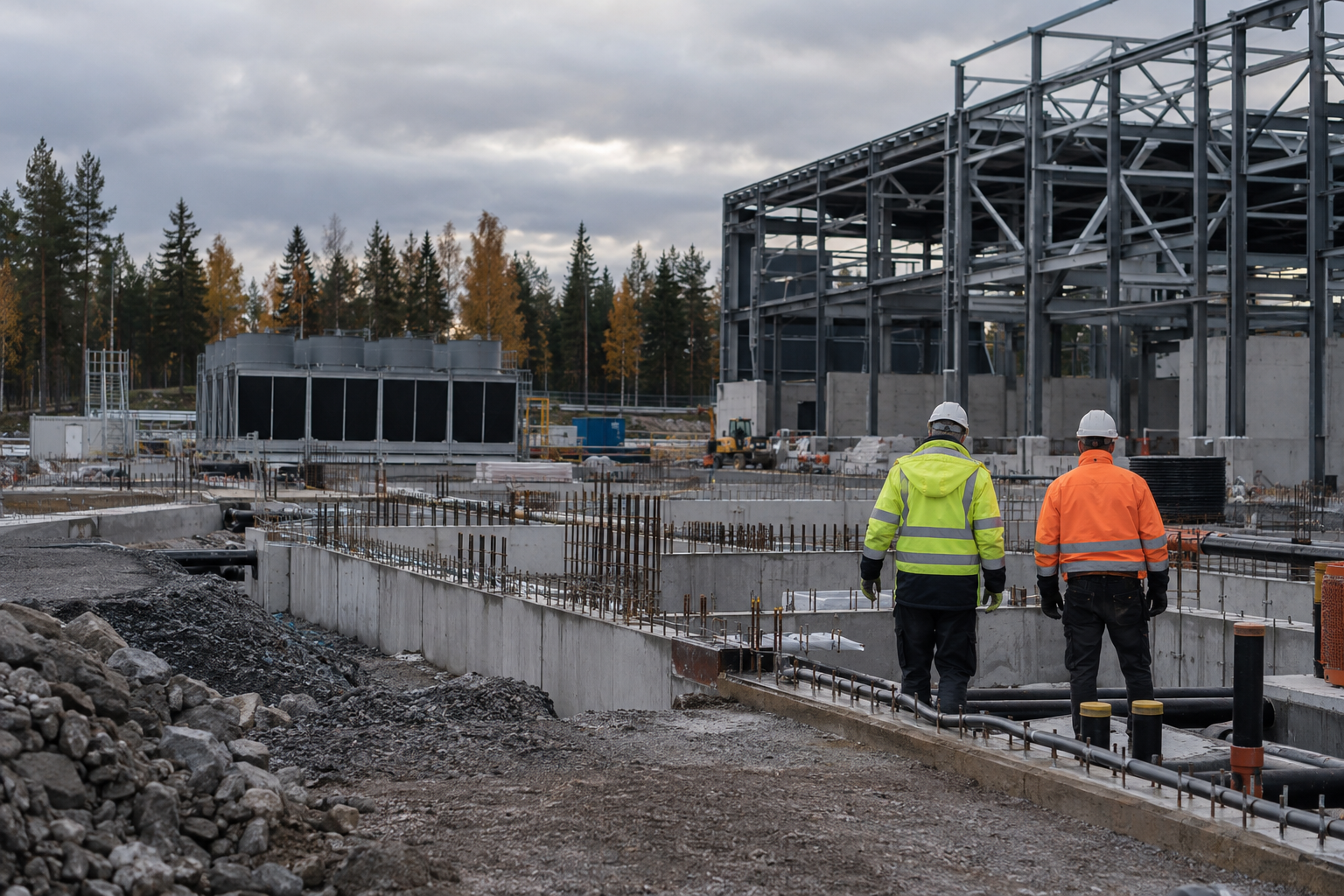
Donald Trump has threatened to block overseas AI data centre construction by US companies, putting projects including Google’s €13bn Finland investment under scrutiny.
21 Nov