
Trade, Regulation & Policy
CMA warns UK retailers over compulsory delivery fees
Online retailers face fines of up to 10% of worldwide turnover for pricing breaches as the CMA presses businesses to disclose compulsory delivery fees upfront.
11 Nov

The daily brief on companies, capital and policy moving into the UK and Europe.
Donald Trump has threatened to block overseas AI data centre construction by US companies, putting projects including Google’s €13bn Finland investment under scrutiny.

By Arjun Mehta, Capital Reporter · London
21 November 2026 · Reported from BBC Business
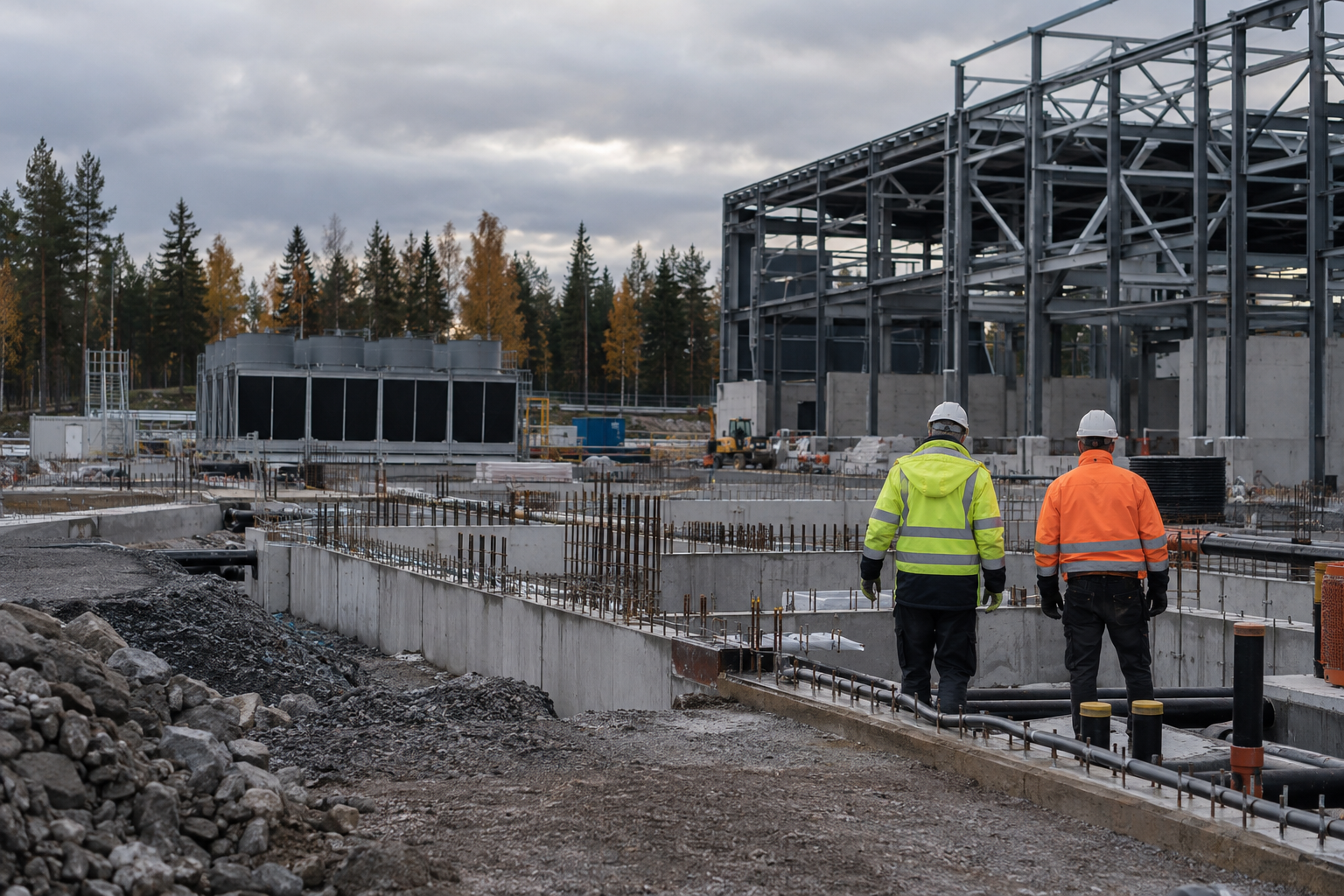
Donald Trump has threatened to stop American companies building AI data centres abroad and impose a large tax on those that do, BBC Business reports. The remarks introduce uncertainty for overseas investment, but the president supplied little detail about how a restriction would work or be enforced.
Google’s €13bn investment in Finnish AI infrastructure, announced in September, was singled out by Trump. The programme includes funding for three data centres, making Finland a direct focus of comments that could affect how US technology companies develop computing capacity in Europe.
Speaking to reporters after returning from Asia, Trump indicated that members of his own administration were hearing the proposal for the first time. According to BBC Business, he said he had not previously discussed it with his team. That leaves an important distinction for businesses assessing the announcement: a presidential threat is not yet a clearly defined operating rule.
The intervention follows a separate Washington announcement on Monday requiring companies to obtain licences to buy advanced computer chips. BBC Business reports that the licensing requirement is intended to help US officials check whether chips are serving Chinese businesses or being smuggled into China. The measures also address access to the computing capacity those chips provide.
South East Asian countries have particular exposure to those controls because they have invested heavily in data centres while Chinese companies seek to rent computing power overseas. The policy therefore reaches beyond the physical movement of hardware to the international provision of computing services.
Canada, meanwhile, has been positioning itself as an alternative destination for AI infrastructure, with less local opposition to projects so far, according to BBC Business. Meta has started construction on a data centre in Alberta, while Anthropic has agreed a long-term lease for a proposed facility in Nova Scotia. Those arrangements illustrate two different routes into overseas capacity: construction and leasing.
Data centres contain the servers and advanced chips used to operate AI services such as Claude and ChatGPT. Their location is consequently part of the infrastructure underpinning international AI deployment, rather than simply a property decision. The geographical distribution of that capacity also connects with Market Entry Wire’s coverage of Europe’s AI sovereignty ambitions and its cloud and chip dependencies.
The domestic US building programme is already substantial. BBC Business cites Pew Research Centre figures showing about 3,000 operating data centres in April, with another 1,500 at different points in the approval and construction process. Many facilities are located in rural areas, where their energy requirements and noise have become contentious local issues.
Those concerns helped Democratic candidates advocating tighter construction rules win elections on 3 November, BBC Business reports. Trump’s proposal would therefore push investment towards the US at a time when some communities there are seeking stronger conditions on development.
Trump presented his position as a response to competition with China, arguing that the US must retain its lead in AI infrastructure. He claimed China would take overseas data centres if American companies were allowed to build them, according to BBC Business. The report provided no supporting detail for that claim.
On enforcement, Trump threatened a “tremendous tax”, BBC Business reports, without specifying a rate. That wording leaves companies unable to calculate a potential financial penalty or compare it with the cost of keeping a project in the US.
Trump also urged American communities to seek financial benefits from developers rather than reject facilities outright. “Make them pay you, make them pay your community,” he said, according to BBC Business. He argued that other locations wanted data centres and had the energy resources to accommodate them, putting community compensation alongside national competitiveness in his case for domestic construction.
For businesses planning UK or European expansion, a central unanswered question is what activity any restriction would cover. BBC Business’s account does not establish how the proposal would treat existing commitments or distinguish companies building their own facilities from those leasing capacity. That distinction matters to infrastructure providers and the businesses relying on their overseas expansion plans.
European development also faces constraints independent of Washington. Construction on two of Google’s Finnish centres was halted last month over concerns about the clearance of more than 300 hectares of forest, BBC Business reports. The interruption shows that securing a destination outside the US does not remove the need to address local environmental concerns.
BBC Business said it had approached Meta for comment on Trump’s remarks, but the supplied report contains no response from the company. It also gives no implementation timetable for the proposed restriction. Until its scope and enforcement mechanism are clarified, companies cannot reliably determine whether a UK or European project would be prohibited, taxed or unaffected.
For companies entering the UK or Europe, access to AI computing capacity is becoming a cross-border policy consideration as well as an infrastructure choice. Trump’s threat raises questions about where US providers could build and how overseas projects might be treated, without supplying rules businesses can yet apply. Google’s Finnish construction interruption adds a separate environmental constraint. Expansion planning therefore needs to distinguish potential US restrictions from local development requirements, rather than assume that either access to capital or an overseas location guarantees delivery.
Source
Original reporting by BBC Business. This report was written independently for Market Entry Wire.
Online retailers face fines of up to 10% of worldwide turnover for pricing breaches as the CMA presses businesses to disclose compulsory delivery fees upfront.
11 Nov

A draft UK-EU food trade agreement would remove costly certificates and reopen export routes, with ministers forecasting £5.1bn in eventual annual economic benefits.
03 Nov
Foreign suppliers winning UK defence contracts worth more than £50m would have to match their value with British investment under rules starting in April 2027.
01 Nov

Temu’s plan to address EU risk assessment failures has been accepted, but regulators want closer scrutiny of gaps and an independent audit of implementation.
27 Oct

Dermaself’s smart mirror matches shoppers with skincare stocked at Ipercoop Baragalla, bringing personalised advice to Italy’s largest cosmetics sales channel.
23 Nov

The Belgian healthtech company will develop camera-based monitoring for humanoid robots while pursuing EU medical device certification and overseas approvals.
19 Nov

Haatch leads the London startup’s seed round as Perry AI targets overseas growth and broader legal support for private equity and venture capital funds.
18 Nov

Helsinki-based Treat has secured pre-seed funding to develop its AI-assisted healthcare service and grow its employer offering in Finland and beyond.
17 Nov