
Trade, Regulation & Policy
CMA warns UK retailers over compulsory delivery fees
Online retailers face fines of up to 10% of worldwide turnover for pricing breaches as the CMA presses businesses to disclose compulsory delivery fees upfront.
11 Nov

The daily brief on companies, capital and policy moving into the UK and Europe.
Ukraine’s steel industry expects exports to the EU could fall by 50–60% as tighter import limits add to the pressures facing producers during Russia’s war.

By Marcus Doyle, North America Correspondent · Toronto
19 October 2026 · Reported from BBC Business
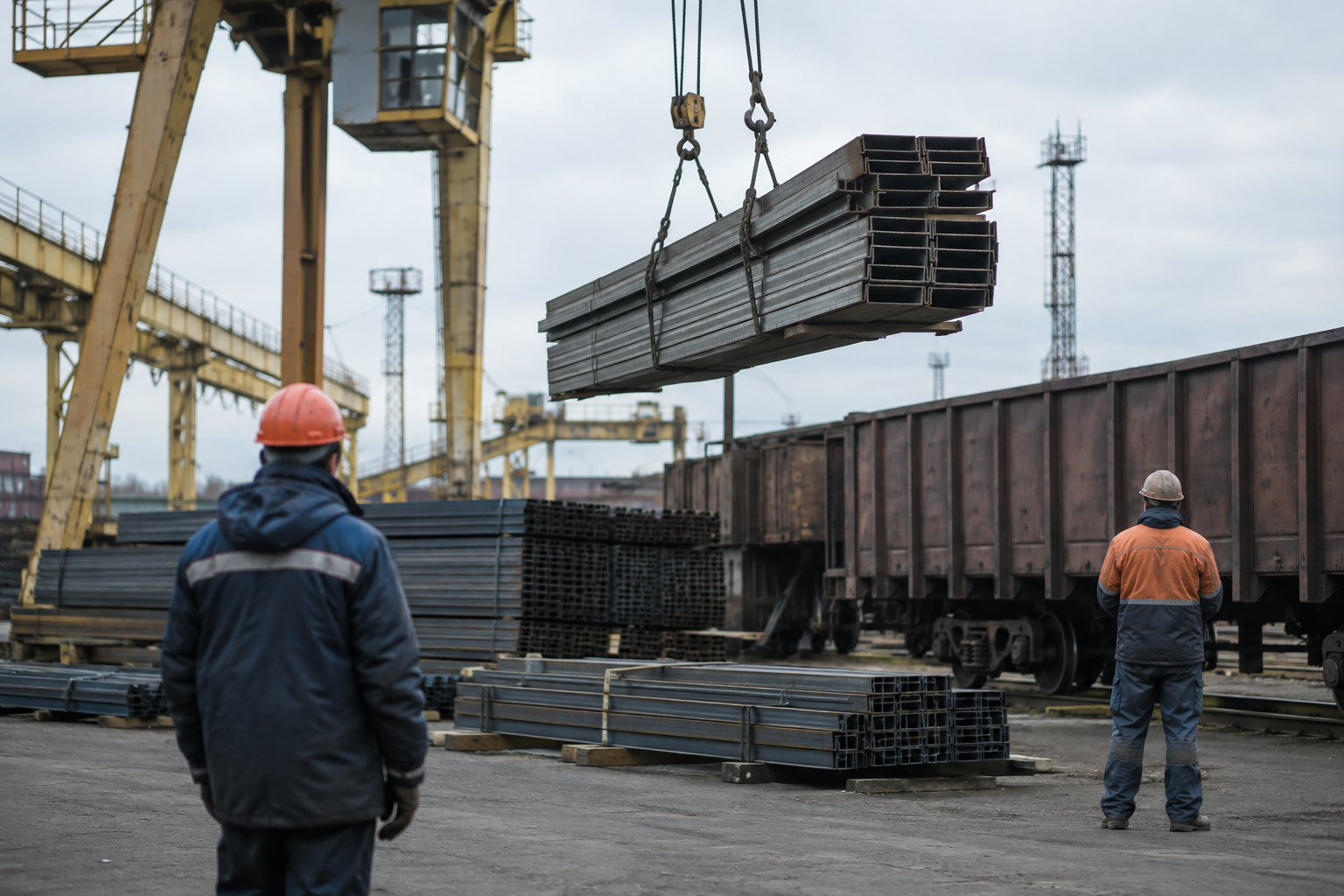
Ukraine’s Metinvest wants an exemption from European Union steel import restrictions after the bloc reduced its annual duty-free allowance to 18.3 million tonnes. Chief executive Yuriy Ryzhenkov made the case to BBC Business as Ukrainian producers warned that their exports to the EU could eventually shrink by 50–60%.
The new allowance is 47% below the 2024 level, BBC Business reported. It covers steel entering the EU from overseas, rather than Ukrainian supplies alone, and includes allocations for individual countries. Brussels introduced the restrictions to shield EU steelmakers from lower-priced competition, including shipments from China and Turkey.
The commercial stakes extend beyond Metinvest, one of Ukraine’s largest steel businesses. Before Russia launched its full-scale invasion in 2022, mining and metallurgy generated approximately 10% of Ukraine’s national income and one-third of its exports, according to BBC Business. The EU is the leading destination for Ukrainian steel.
Ukraine’s free-trade agreement with the EU does not prevent Brussels from applying additional trade-defence measures. That leaves steel producers exposed to restrictions despite the wider agreement governing commerce between Ukraine and the bloc.
Production has also come under direct military pressure. BBC Business reported that every Ukrainian steel mill had suffered bombing since the full-scale invasion began. Ryzhenkov said attacks had recently become substantially more frequent and that, at one point in September, steelmaking across the country stopped completely — something he said had not happened for about 150 years.
The human cost for Metinvest has been severe: nearly 800 employees have died since the war began, BBC Business reported. That loss sits alongside the physical damage and interruptions confronting the company’s operations.
Ryzhenkov’s objection centres on the rationale for treating a country at war alongside other overseas suppliers. Speaking to BBC Business, he argued that the restrictions failed to reflect Ukraine’s circumstances and that continued European sales were essential to keeping the industry operating.
The European Commission disputed the suggestion that Ukraine’s position had been overlooked. A spokesperson told BBC Business that its circumstances had informed the policy and said Ukraine’s dedicated allocation secured a volume of exports, while acknowledging that the permitted amount was below previous years. The Commission also said compensation had been offered to major suppliers, including Ukraine.
Within Metinvest’s mills, Ryzhenkov said the company had upgraded sheltered spaces for employees during air raids. He described safety procedures and compliance with them as the practical means of reducing danger, while stressing that protecting an entire steelworks from damage was not possible.
Ryzhenkov expects the coming winter to rank among the most difficult the company has faced, according to BBC Business. He said Ukraine lacked the logistics needed to serve markets other than the EU, limiting producers’ ability to redirect sales if European access contracts. His exemption request therefore concerns an outlet that cannot readily be replaced, rather than a choice between equally accessible destinations.
For businesses planning European sales or sourcing arrangements, the policy creates a practical distinction between access under a trade agreement and the volume that can enter without duty. Expansion plans built around Ukrainian steel need to account for the applicable allocation, not simply assume that a free-trade relationship settles the import position.
That quota question is separate from the compliance work involved in the EU’s carbon border regime, covered in Market Entry Wire’s reporting on customs readiness for EU carbon border rules. For companies entering European supply chains, treating trade allowances and border compliance as distinct planning tasks helps avoid overlooking either requirement.
For companies entering European markets, Metinvest’s challenge shows why a free-trade agreement is only one part of market-access planning. Steel businesses must also assess country allocations, duty exposure and the practical ability to move goods to alternative buyers. Ukrainian suppliers face the additional pressure of wartime disruption, making access to their largest customer especially consequential. Buyers building European supply chains should distinguish between commercial demand, the rules governing imports and suppliers’ capacity to maintain deliveries.
Source
Original reporting by BBC Business. This report was written independently for Market Entry Wire.
Online retailers face fines of up to 10% of worldwide turnover for pricing breaches as the CMA presses businesses to disclose compulsory delivery fees upfront.
11 Nov

A draft UK-EU food trade agreement would remove costly certificates and reopen export routes, with ministers forecasting £5.1bn in eventual annual economic benefits.
03 Nov
Foreign suppliers winning UK defence contracts worth more than £50m would have to match their value with British investment under rules starting in April 2027.
01 Nov

Temu’s plan to address EU risk assessment failures has been accepted, but regulators want closer scrutiny of gaps and an independent audit of implementation.
27 Oct

The Swiss-American startup will develop its banking platform and expand its commercial team across Europe, the Middle East and Africa.
10 Nov

Assessments taking 31 minutes or several hours expose a data-readiness gap as brands face growing demands for evidence about their supply chains.
08 Nov

Europe’s proposed MEDIA+ budget would more than double existing funding, but national financing rules and territorial rights still constrain cross-border releases.
07 Nov

Circana figures reported by Cosmetics Business show European prestige body care gaining ground as brands bring facial skincare ingredients into body treatments.
05 Nov