
Market Intelligence & Trends
Frozen yoghurt brands expand in UK as £12 treats draw queues
Go Greek, Myka and Yo-Chi have opened in London as frozen yoghurt returns to favour, with Europe’s market estimated at £434m in 2026.
07 Oct

The daily brief on companies, capital and policy moving into the UK and Europe.
Export figures cited by Emerging Europe underpin analyst Radu Magdin’s case for making Central and Eastern Europe a bigger part of Germany’s growth strategy.

By Sophie Lindqvist, Policy Correspondent · Brussels
9 October 2026 · Reported from Emerging Europe
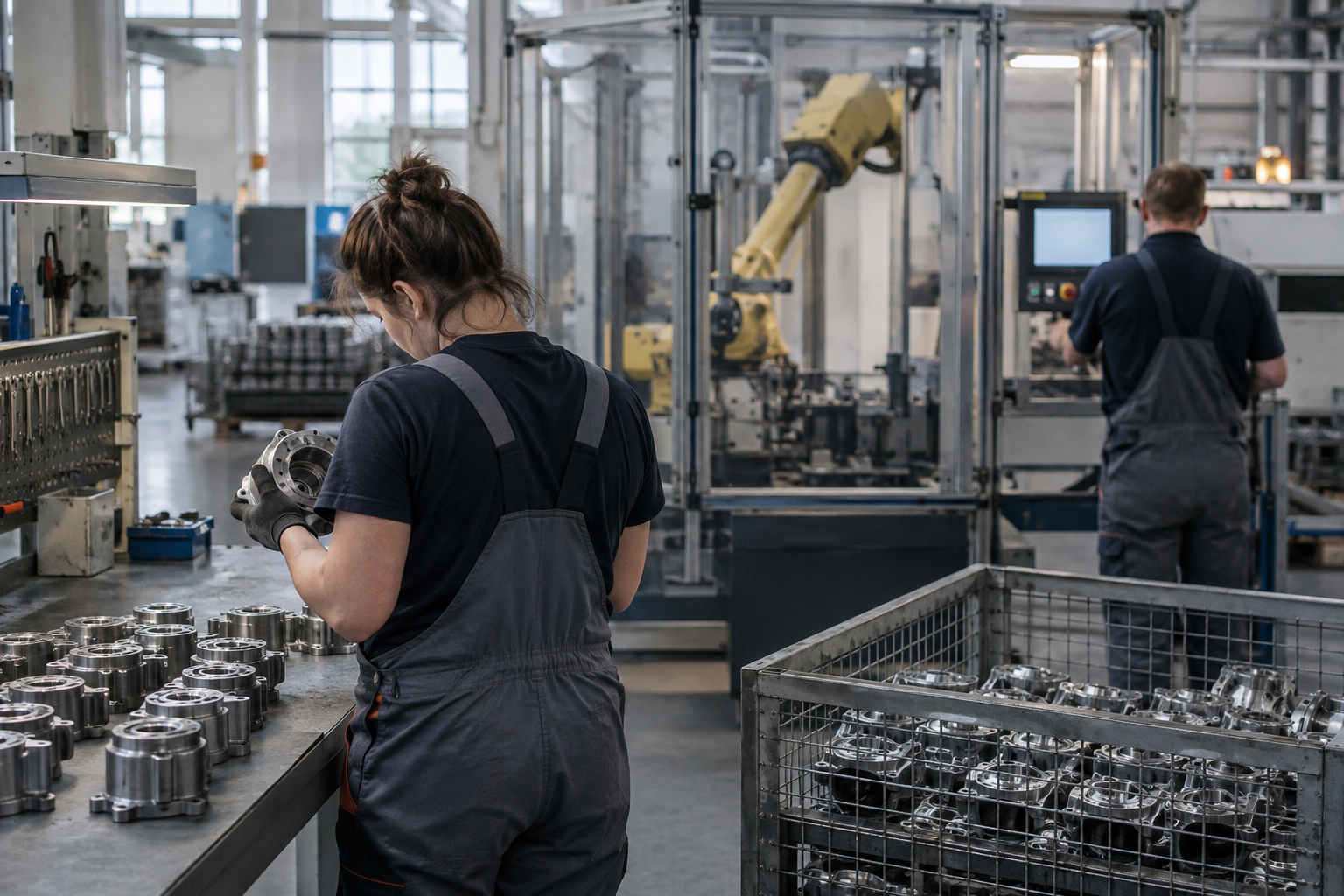
German exports to the 29 countries monitored by the Ost-Ausschuss increased by 7.4% to €154.4bn in the first half of 2026, according to figures cited in Emerging Europe. The group accounted for more than a third of Germany’s overall export growth, while German sales to the United States and China declined.
Germany also exports more to Poland than to China, Emerging Europe reports. Writing for the outlet, analyst and consultant Radu Magdin argues that the changing trade balance gives German businesses a reason to treat Central and Eastern Europe as a destination for growth, rather than primarily a base for lower-cost production.
Investment preferences point in the same direction. According to the German-CEE Business Outlook cited by Emerging Europe, German companies identified Poland, Ukraine, Romania and Czechia as their leading regional investment destinations in 2026. The findings place established manufacturing partners alongside Ukraine, where Magdin sees substantial future demand from reconstruction.
The article presents a strategic argument, not an announcement of a new investment programme. Magdin, a former adviser to prime ministers in Romania and Moldova, calls for German companies and their eastern neighbours to develop businesses together, with Central and Eastern European firms taking a greater role in technology, capital and commercial decisions.
The urgency comes from a prolonged period of economic weakness. Emerging Europe reports that Germany’s economy contracted in 2023 and 2024, then recorded only limited growth in 2025. High energy costs have weighed particularly heavily on chemicals and metals, while US tariffs and stronger Chinese competition have put pressure on an economy built around exports.
German industrial demand also shapes activity across Poland, Czechia, Slovakia, Hungary and western Romania. Magdin describes production networks in which weaker orders in Stuttgart quickly affect factories in Timișoara and Žilina. For suppliers considering European expansion, that exposure makes the health of German customers relevant well beyond Germany’s own market.
The outlook is not uniformly negative. According to Emerging Europe, the Bundesbank continues to expect a recovery, with stronger growth in the first half of 2026. The article also identifies low water levels on the Rhine as one temporary contributor to the recent slowdown, distinguishing transport disruption from deeper industrial weaknesses.
Magdin argues that Germany cannot simply restore the conditions behind its previous success. In his assessment, that model benefited from inexpensive Russian gas, Chinese demand, US security support and a global trading system well suited to German machinery. Replacing those advantages requires a different commercial proposition, rather than waiting for former customers and cost structures to return.
Central and Eastern Europe offers different capabilities within that proposition. Magdin highlights Poland’s market size and growing pool of capital, alongside the advanced manufacturing base in Czechia and Slovakia. He identifies Romania’s domestic market, Black Sea access, energy resources and technology workforce as assets that extend its role beyond supplying German factories.
The Baltics add experience in digital government and defence innovation, according to Magdin’s Emerging Europe analysis. These distinctions matter for market selection: the regional opportunity spans production, technology and security, rather than representing a single, interchangeable manufacturing location.
Magdin’s central industrial recommendation is to connect Germany’s engineering expertise with AI-enabled manufacturing, robotics, industrial software, defence and energy systems. He argues in Emerging Europe that the country’s strength remains its ability to manufacture technically demanding products, making technology adoption particularly important for the Mittelstand of smaller and medium-sized businesses.
He also wants corporate confidence to become more measurable. Rather than issuing broad assurances or warnings about Germany’s competitiveness, business leaders should commit to domestic investment, apprenticeships and factory upgrades, he argues. Companies should also explain which energy-price changes or shorter permitting processes would enable them to release further capital.
The political challenge, in Magdin’s view, is that Germany’s mainstream parties have not offered a sufficiently clear account of where the economy is heading. He argues that the AfD has been more effective at combining public frustration over migration, energy, industrial decline and national identity into a single political message. His proposed response combines an honest assessment of conditions, recognition of public concerns and a practical direction for change.
On European policy, Magdin calls for closer integration of capital markets and energy, a common defence-industrial market and fewer obstacles to cross-border services. His argument is commercial as well as political: German and Central European companies need access to a larger, more usable home market when competing against US technology businesses and Chinese industrial networks.
Labour shortages are another shared constraint. Emerging Europe’s analysis notes that Central and Eastern European countries which supplied doctors and engineers to western markets now face shortages themselves. Magdin therefore advocates migration policies that combine border control with access to workers, treating demographics as a cross-border economic issue rather than a purely German problem.
For companies planning European growth, Magdin’s proposed shift would change the relationship with German customers. Central and Eastern European businesses would participate more directly in German commercial networks, rather than remaining subcontractors. German companies, meanwhile, could use partnerships in the region to develop business towards Ukraine, the Black Sea and the Caucasus. These are opportunities identified in the analysis, not announced market-entry projects.
Magdin points to Polish capital moving abroad, Romanian and Czech technology companies expanding, and defence production developing across Europe’s eastern flank as foundations for that approach. The implication is a broader choice of partners: a regional expansion strategy could involve investors, software developers and specialist manufacturers, as well as conventional component suppliers.
Defence cooperation already features in Market Entry Wire’s reporting on German funding for Quantum Systems interceptor production in Ukraine and the ARX Robotics–Roboneers ground-drone partnership. Those developments provide specific industrial context for the wider security partnership Magdin advocates, without establishing that his broader proposals have been adopted.
The potential demand extends beyond weapons. Magdin identifies reliable energy supplies, transport infrastructure capable of serving civilian and military needs, resilient networks and scalable factory output as elements of European security. For businesses assessing new markets, that widens the relevant sectors to infrastructure, energy technology and industrial capacity.
Emerging Europe’s article provides no delivery timetable for the proposed capital markets, energy or defence-market reforms. Companies therefore cannot treat those changes as settled operating conditions. In Magdin’s framework, energy costs, permitting requirements and workforce availability remain practical tests for investment decisions, even where rising regional trade provides a stronger commercial incentive to expand.
For companies entering European markets, the trade figures make Central and Eastern Europe harder to treat as a secondary option. Market selection can consider access to German customers alongside local demand, technical capabilities and investment partners. Magdin’s analysis also makes an important distinction between commercial opportunity and policy ambition: deeper energy, capital and defence markets remain proposals in this account. Expansion plans still need to work against existing energy costs, permitting requirements and labour constraints, rather than assuming those barriers will disappear.
Source
Original reporting by Emerging Europe. This report was written independently for Market Entry Wire.
Go Greek, Myka and Yo-Chi have opened in London as frozen yoghurt returns to favour, with Europe’s market estimated at £434m in 2026.
07 Oct

Richard Tavernor says the cost of taking iVendi into Europe shaped Yoono’s approach to product design, customer economics and technical leadership.
02 Oct

Vilnius-based Axiology is among four platforms using the Eurosystem’s new Pontes service, giving digital securities customers a central bank money settlement option.
29 Sept

Brussels says electrification could cut annual fossil fuel imports by €260bn by 2040, but uneven incentives are reshaping Europe's electric car market.
27 Sept
France’s finance minister has encouraged Britain to return to the EU as proposed industrial support rules raise concerns over UK supply chains.
08 Oct

Copenhagen-based TODAY has secured seed backing as it prepares to extend its AI platform for financial and insurance advisers across Germany, Austria and Switzerland.
08 Oct

Birmingham Tech Week returns on 19–23 October with an AI-focused programme bringing investors, researchers and businesses together across the West Midlands.
07 Oct

Equinor says rejecting Rosebank and Jackdaw could put future UK investment at risk, as ministers weigh energy supply, climate assessments and public objections.
07 Oct